


Why Usage-Based Insurance Is the Future of Affordable Coverage
Car insurance has entered a new era—one driven by data, technology, and personalization. Instead of paying a flat rate based solely on demographics or location, drivers can now pay based on how they drive. This modern approach is called Usage-Based Insurance (UBI), and it uses telematics programs to monitor driving behavior in real time.
According to McKinsey & Company, telematics-driven insurance is transforming the industry, rewarding safer drivers with lower premiums and helping insurers better assess risk. If you’ve ever felt frustrated by rising car insurance rates despite driving carefully, UBI could be your ticket to fairer pricing and serious savings.
Let’s explore how usage-based insurance works, its benefits and drawbacks, and how you can use telematics to reduce your premiums.
1. What Is Usage-Based Insurance (UBI)?
Usage-Based Insurance allows your driving habits to determine how much you pay for coverage. Instead of traditional models based on age, gender, or zip code, insurers track real-world driving behavior using telematics devices or smartphone apps.
Telematics systems record:
- Speed and acceleration patterns.
- Braking behavior.
- Mileage and trip frequency.
- Time of day you drive (day vs. night).
- Cornering and phone use while driving.
How it works:
A telematics device (or mobile app) collects driving data, which the insurer uses to calculate your risk profile. The safer and more consistent your habits, the greater your potential discount.
Pro Tip: The National Association of Insurance Commissioners (NAIC) reports that many UBI programs can reduce premiums by 10% to 40%, depending on performance.
Takeaway: With UBI, careful drivers finally get rewarded for their real habits—not stereotypes.
2. Types of Usage-Based Insurance Programs
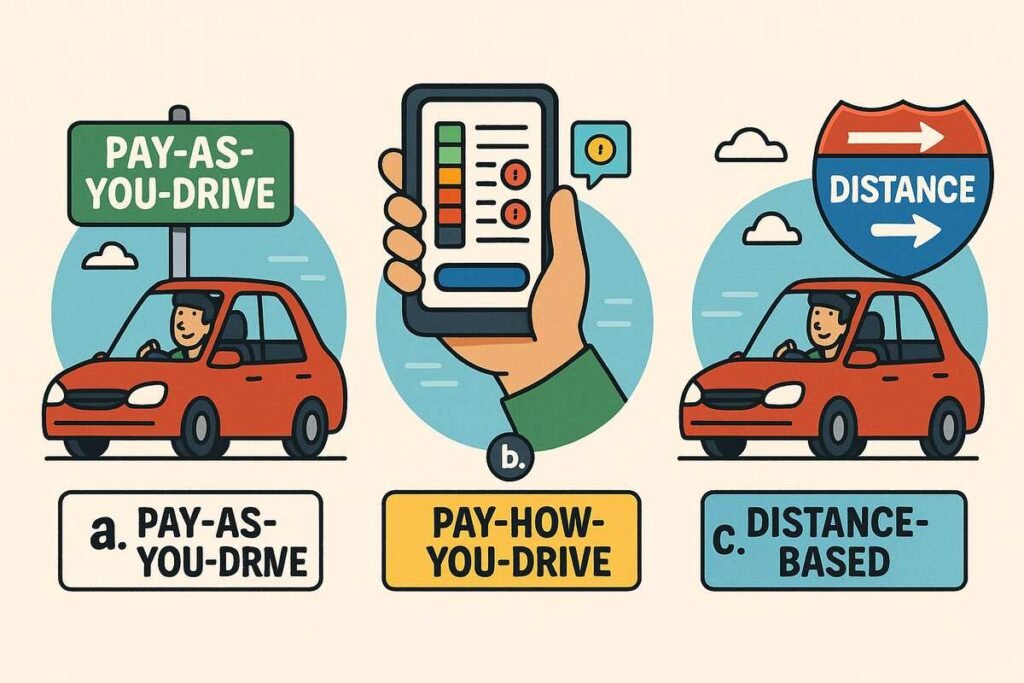
Not all telematics programs are the same. Understanding their differences helps you choose the right one.
a. Pay-As-You-Drive (PAYD)
Your premium depends on the number of miles you drive. Ideal for people who work remotely, carpool, or own secondary vehicles.
b. Pay-How-You-Drive (PHYD)
Focuses on driving behavior such as braking, acceleration, and speed. Perfect for safe, cautious drivers who want performance-based rewards.
c. Distance-Based Hybrid Plans
Combine mileage with behavior tracking to offer more precise risk assessments.
Example: If you drive only 6,000 miles annually and maintain a clean record, a PAYD plan could cut your annual premium by 20% or more.
Takeaway: The less you drive—or the safer you drive—the less you pay.
3. Benefits of Telematics and UBI Programs
Usage-based insurance offers major advantages for both drivers and insurers.
For Drivers:
- Personalized pricing: Pay only for how you actually drive.
- Lower premiums: Safe driving can earn substantial discounts.
- Real-time feedback: Apps provide driving reports to help improve habits.
- Environmental benefits: Encourages fewer trips and eco-friendly driving.
For Insurers:
- Better risk assessment: Data-based pricing helps reduce fraud.
- Improved customer relationships: Drivers feel rewarded for safety.
Case Study: A 2023 report from Allstate’s Drivewise program revealed that safe participants saved an average of 20% and reported fewer claims within their first year.
Takeaway: UBI benefits everyone—safe drivers save, and insurers gain transparency.
4. Common Concerns and Privacy Considerations
While telematics brings savings, it also raises privacy questions.
Concerns include:
- Data sharing: Who owns your driving data—the insurer or you?
- Tracking location: Some devices collect GPS data.
- Security: Risk of data breaches or misuse.
How insurers address it:
Most companies now allow drivers to review what data is collected and provide clear opt-out options. For instance, Progressive’s Snapshot program focuses mainly on driving patterns, not location.
Pro Tip: Always review your insurer’s privacy policy before enrolling.
Takeaway: Transparency is key—choose programs that clearly state how your data is used.
5. How to Enroll in a Telematics Program

Joining a usage-based insurance program is typically straightforward.
Steps to get started:
- Check availability: Confirm your insurer offers UBI in your state.
- Sign up: Enroll through your insurance provider’s website or app.
- Install the telematics device: Either plug a small sensor into your car’s OBD-II port or download a mobile app.
- Drive normally: Your insurer collects data for several weeks or months.
- Review your score: After the evaluation period, your discount is applied at renewal.
Example: Drivers in State Farm’s Drive Safe & Save program see up to 30% savings after their first monitored period.
Takeaway: The process is simple—and the rewards can be significant.
Real-Life Example: A Driver’s Savings Journey
Meet Laura, a 32-year-old teacher who drives 8,000 miles a year. After enrolling in a telematics program with Nationwide SmartRide, she improved her driving habits by braking gently and avoiding late-night trips. Within six months, she earned a 25% discount—saving $300 annually.
Laura also appreciated how the program gave her weekly feedback, motivating her to stay consistent. Her story illustrates how UBI can turn safe habits into real financial rewards.
Comparison Table: Popular Telematics Programs
| Insurer | Program Name | Savings Potential | Type | Key Features |
|---|---|---|---|---|
| Progressive | Snapshot | Up to 30% | PAYD/PHYD | App-based feedback, real-time scoring |
| Allstate | Drivewise | Up to 25% | PHYD | Rewards for safe driving, trip summaries |
| State Farm | Drive Safe & Save | Up to 30% | PAYD | Bluetooth tracking via OnStar or app |
| Nationwide | SmartRide | Up to 40% | PHYD | Personalized driving feedback |
| Liberty Mutual | RightTrack | 5–30% | PAYD/PHYD | Automatic discount after monitoring period |
Frequently Asked Questions About Usage-Based Insurance
1. Does usage-based insurance really save money?
Yes. Safe and low-mileage drivers typically save between 10–40% annually, depending on the program.
2. Will my rates go up if I drive poorly?
Some programs only offer discounts, while others may adjust premiums upward—check the terms before enrolling.
3. Do telematics programs track my exact location?
Most do not store precise GPS data long-term, but always read the insurer’s privacy policy.
4. Can young drivers benefit from UBI?
Absolutely. New drivers who demonstrate safe habits can offset age-related premium increases.
5. What happens if I switch insurers?
You can transfer your telematics data in some cases, but typically you’ll need to start fresh with the new insurer.
Expert Tips to Maximize Savings with Telematics
- Drive during safer hours: Avoid late-night and rush-hour trips.
- Brake smoothly: Harsh braking is one of the biggest red flags.
- Avoid speeding: Maintain consistent speeds within posted limits.
- Limit distractions: Keep phone use minimal while driving.
- Review your feedback: Use the app’s insights to continuously improve.
Final Thoughts
Usage-based insurance and telematics programs represent a major shift in how car insurance works. Instead of paying for assumptions about your driving, you pay for your actual behavior. For careful, responsible drivers, this means real savings and a more transparent relationship with insurers.
Whether you drive sparingly, commute daily, or manage a family vehicle, joining a telematics program is a smart step toward affordable, data-driven insurance.
If this article helped you understand how usage-based insurance can save you money, share it with your friends and explore more smart driving insights on our blog.