


Introduction
For decades, car insurance pricing has relied on broad assumptions, age, location, vehicle type, and historical averages. This model often penalizes drivers who rarely use their cars. If you drive only a few thousand miles a year, paying the same rates as high-mileage commuters can feel fundamentally unfair.
Pay-per-mile car insurance offers a different approach. Instead of charging primarily for who you are, it charges for how much you actually drive. According to the Insurance Information Institute, mileage is one of the strongest predictors of accident risk, making distance-based pricing a more accurate reflection of real exposure.
This article explains how pay-per-mile car insurance works, who benefits most, potential drawbacks, and how low-mileage drivers can use it to save substantial money.
What Is Pay-Per-Mile Car Insurance?
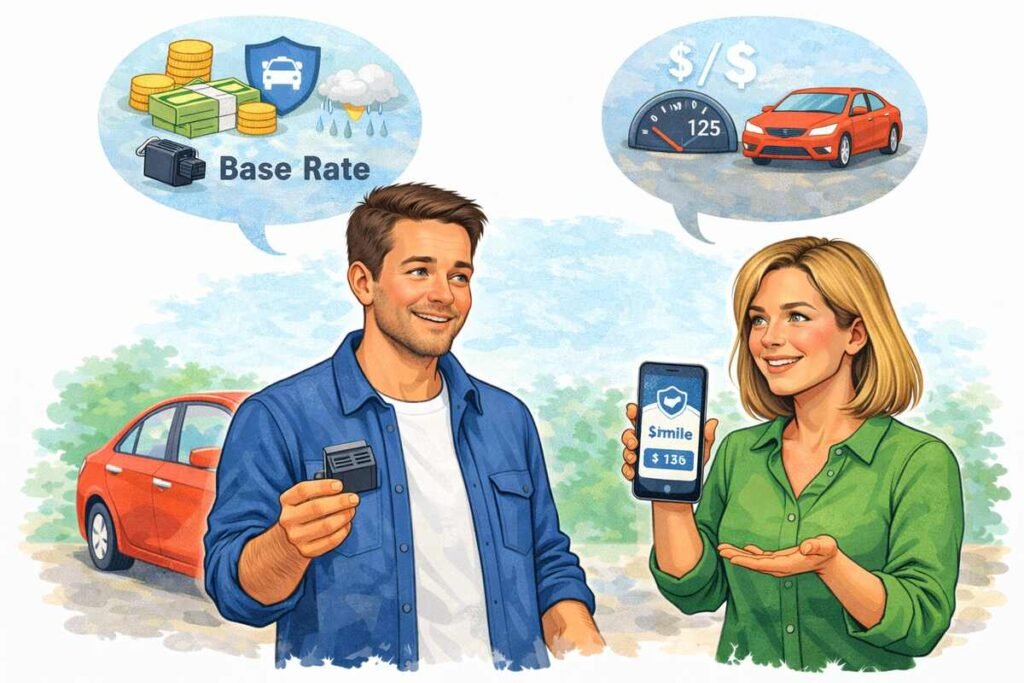
Pay-per-mile car insurance is a usage-based pricing model where premiums are tied directly to mileage.
Most policies combine:
- A base rate (covers theft, weather damage, and parked-car risk)
- A per-mile charge (applies only when you drive)
Mileage is typically tracked via a plug-in device or mobile app. Analysis from McKinsey & Company shows that mileage-based pricing improves risk accuracy while lowering costs for low-use drivers.
This model rewards drivers who spend more time parked than on the road.
How Pay-Per-Mile Insurance Works in Practice
Once enrolled, insurers calculate your bill monthly:
- Base premium (fixed cost)
- Miles driven × per-mile rate
For example, if your base rate is $40 and you drive 300 miles at $0.05 per mile, your monthly cost is $55.
Providers such as Metromile and other mileage-based programs outline this transparent structure clearly.
Who Benefits Most From Pay-Per-Mile Insurance

This model is not ideal for everyone, but it’s powerful for specific drivers.
According to consumer analysis from ValuePenguin, the biggest savings go to drivers who log fewer than 7,000 miles annually.
Ideal candidates include:
- Remote and hybrid workers
- Retirees
- Urban residents using public transit
- Households with secondary vehicles
For these groups, traditional policies often overcharge.
How Much Can You Really Save?
Savings vary by state, insurer, and driving habits, but they can be substantial.
Research summarized by NerdWallet shows that low-mileage drivers can save 20–40% annually compared to standard policies.
Factors affecting savings:
- Miles driven per month
- Driving environment (urban vs rural)
- Vehicle type and safety features
The fewer miles you drive, the stronger the financial upside.
Pay-Per-Mile vs Traditional Insurance

Traditional insurance:
- Fixed premium regardless of usage
- Penalizes low-mileage drivers
- Limited transparency
Pay-per-mile insurance:
- Variable pricing tied to usage
- Rewards low exposure
- Clear monthly cost breakdown
Industry comparisons from Consumer Reports show mileage-based models outperform traditional pricing for infrequent drivers.
Privacy and Data Considerations
Mileage tracking raises understandable privacy questions.
Most pay-per-mile insurers collect only distance data, not detailed location histories. Regulatory guidance from the National Association of Insurance Commissioners requires transparency around data usage.
Key points to verify:
- What data is collected
- How long it is stored
- Whether location tracking is optional
Understanding terms upfront prevents surprises later.
Common Myths About Pay-Per-Mile Insurance
Myth 1: It’s only for young drivers
Mileage matters more than age.
Myth 2: One long road trip ruins savings
Occasional spikes rarely outweigh annual low usage.
Myth 3: Coverage is limited
Coverage levels mirror standard policies.
Clarity removes hesitation.
When Pay-Per-Mile Is NOT a Good Choice
This model may not fit:
- Long-distance commuters
- Gig drivers and delivery workers
- Road-trip-heavy lifestyles
If mileage is consistently high, traditional policies may be cheaper.
How to Decide If Pay-Per-Mile Is Right for You
Ask yourself:
- How many miles do I drive yearly?
- Has my driving dropped recently?
- Do I want transparent, usage-based pricing?
Comparing quotes from both models reveals true value.
Final Thoughts
Pay-per-mile car insurance reflects a broader shift toward fairness and personalization in pricing. For low-mileage drivers, it replaces guesswork with transparency and rewards safer, less frequent driving.
By aligning costs with actual usage, this model turns driving less into a direct financial advantage.
For drivers who don’t live on the road, paying by the mile simply makes sense.