


What “No‑Deposit” Really Means and Why Drivers Are Searching for It
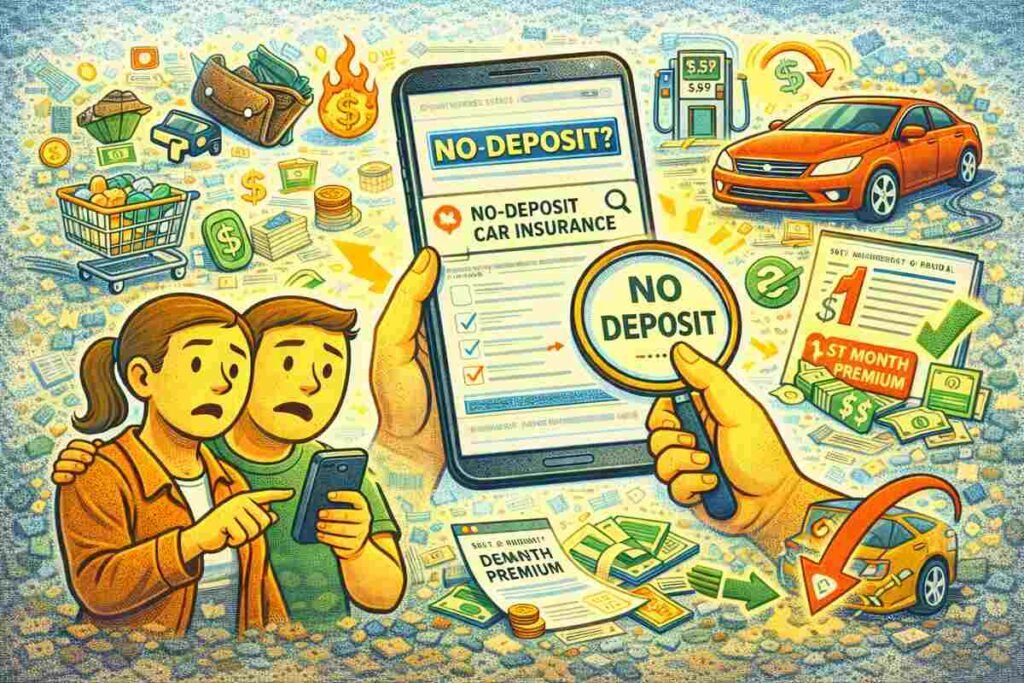
No-Deposit Car Insurance offers a way for drivers to stay legally insured without paying a large upfront amount. In 2026, with rising premiums, inflation pressure, and tighter household budgets, many drivers are actively searching for no-deposit options to reduce the burden of an initial payment.
The term sounds simple, but it’s often misunderstood.
According to Forbes Advisor research, no-deposit insurance doesn’t mean free coverage or zero upfront cost. Instead, it refers to policies that don’t require a separate down payment beyond the first month’s premium.
This guide explains exactly how no-deposit car insurance works, who qualifies, the pros and cons, common myths, and how to decide whether it’s the right option for you in 2026.
What Is No‑Deposit Car Insurance?
No‑deposit car insurance allows drivers to start coverage without paying a large lump‑sum deposit. Instead of paying a traditional down payment plus monthly premiums, you simply pay your first month’s premium, and coverage begins immediately.
Key Characteristics
- No separate deposit fee
- Monthly billing from day one
- Coverage starts after first payment
- Often paired with automatic payments
Important distinction:
You’re still paying something upfront, just not an extra deposit.
Takeaway: No‑deposit doesn’t mean no cost, it means no extra upfront barrier.
Why Traditional Car Insurance Often Requires a Deposit
To understand no‑deposit options, it helps to know why deposits exist in the first place.
Why Insurers Ask for Deposits
- Reduce risk of early cancellation
- Offset higher risk drivers
- Improve cash flow for insurers
- Compensate for poor credit history
The Insurance Information Institute explains in its pricing overview that deposits are primarily a risk‑management tool—not a legal requirement.
Takeaway: Deposits protect insurers, not drivers.
How No‑Deposit Car Insurance Works (Step by Step)
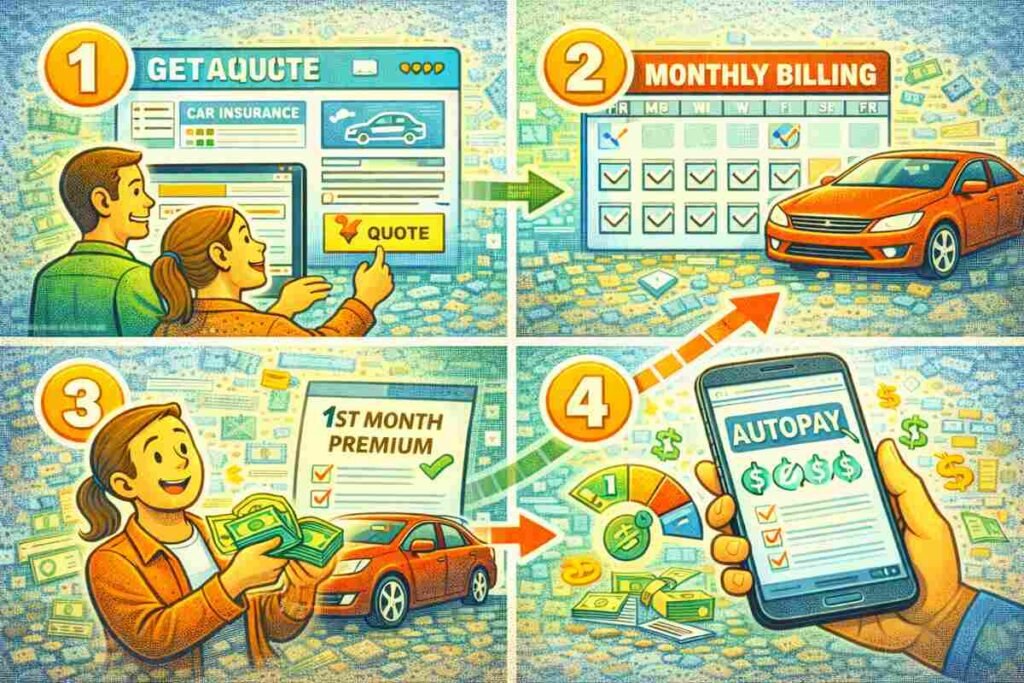
Step 1: Get a Quote
You apply like any other policy, vehicle, driving history, location, and coverage needs all matter.
Step 2: Choose Monthly Billing
Instead of paying 2–3 months upfront, you select a monthly payment plan.
Step 3: Pay First Month Only
Coverage activates once the first month’s premium clears.
Step 4: Automatic Monthly Payments Begin
Most no‑deposit policies require autopay to reduce missed payments.
Takeaway: Operationally, no‑deposit insurance is about payment structure, not coverage type.
Who Qualifies for No‑Deposit Car Insurance in 2026?

Not everyone qualifies automatically, but more drivers do than you might expect.
Common Qualifying Factors
- Clean or moderate driving record
- Stable payment history
- Willingness to enroll in autopay
- Reasonable coverage limits
Drivers Most Likely to Qualify
- Experienced drivers with no recent accidents
- Remote workers with low mileage
- Drivers bundling auto with renters or home insurance
According to Consumer Reports guidance, insurers increasingly favor predictable payment behavior over large upfront payments.
Takeaway: Reliability matters more than income level.
Who May Not Qualify (or Pay More)
Some drivers can still get coverage, but not always without a deposit.
Higher‑Risk Profiles
- Recent DUI or major violations
- Multiple at‑fault accidents
- Lapsed insurance history
- Very poor credit (where legally allowed)
In these cases, insurers may:
- Require a deposit
- Increase monthly premiums
- Limit coverage options
Takeaway: No‑deposit availability reflects perceived risk, not fairness.
Pros of No‑Deposit Car Insurance
1. Lower Upfront Cost
Ideal for drivers managing cash flow or unexpected expenses.
2. Faster Coverage Activation
Get insured quickly without waiting to save for a deposit.
3. Easier Budgeting
Predictable monthly payments instead of large initial hits.
4. Greater Accessibility
Helps drivers avoid lapses in coverage, which can raise future premiums.
Takeaway: Flexibility is the biggest advantage.
Cons and Hidden Trade‑Offs
No‑deposit insurance isn’t always cheaper overall.
Potential Downsides
- Higher monthly payments
- Fewer insurer options
- Strict payment schedules
- Heavier penalties for missed payments
The Consumer Financial Protection Bureau warns in its insurance payment guidance that missed payments can lead to rapid cancellation under monthly billing plans.
Takeaway: Flexibility requires discipline.
No‑Deposit vs Low‑Deposit vs Pay‑In‑Full
| Payment Type | Upfront Cost | Monthly Cost | Best For |
|---|---|---|---|
| No‑deposit | Low | Higher | Cash‑flow sensitive drivers |
| Low‑deposit | Medium | Moderate | Average risk drivers |
| Pay‑in‑full | High | Lowest | Drivers with savings |
Takeaway: The cheapest option long‑term isn’t always the most accessible.
How Credit Affects No‑Deposit Eligibility
In many regions, insurers use credit‑based insurance scores.
What Credit Influences
- Deposit requirements
- Monthly premium size
- Payment plan availability
However, several states restrict or ban credit use. The National Association of Insurance Commissioners explains these rules in its consumer overview.
Takeaway: Credit matters, but not everywhere.
Tips to Qualify for No‑Deposit Insurance
Smart Moves
- Maintain continuous coverage
- Enroll in automatic payments
- Choose realistic coverage limits
- Bundle policies when possible
- Avoid policy lapses
Pro tip: Even a short lapse can eliminate no‑deposit eligibility.
Real‑Life Example: Avoiding a Coverage Lapse
After a job transition, a driver couldn’t afford a large upfront payment. By choosing a no‑deposit monthly plan, they:
- Avoided a coverage gap
- Maintained legal compliance
- Preserved long‑term insurability
Lesson: No‑deposit insurance can be a bridge, not a compromise.
Common Myths About No‑Deposit Car Insurance
- “It’s a scam” – False
- “Coverage is worse” – False
- “Only bad drivers use it” – False
- “It costs more overall” – Sometimes, but not always
Takeaway: The structure is different, not inferior.
Frequently Asked Questions
1. Is no‑deposit insurance available everywhere?
Availability varies by insurer and state.
2. Can I switch to pay‑in‑full later?
Yes, most insurers allow changes at renewal.
3. Does no‑deposit mean month‑to‑month insurance?
Not usually, it’s still a standard policy term.
4. Can I cancel anytime?
Yes, but missed payments may trigger fees.
5. Is no‑deposit insurance good for long‑term use?
It can be, but compare total annual cost.
Final Thoughts
No‑deposit car insurance isn’t a loophole, it’s a payment structure designed for flexibility. In 2026, as premiums rise and financial unpredictability increases, these plans help drivers stay insured without sacrificing stability.
The key is understanding the trade‑offs. Used wisely, no‑deposit insurance can protect both your budget and your driving record.
If this guide helped you understand no‑deposit car insurance options, share it or explore more smart auto‑insurance insights on our blog.