


Climate Change Is Now a Core Insurance Issue

Climate Risk and Car Insurance are now tightly linked as extreme weather becomes a defining risk factor in 2026.
Floods, wildfires, hailstorms, hurricanes, heatwaves, and winter storms are occurring more frequently and causing more severe vehicle damage. As a result, insurers are rewriting coverage models, adjusting premiums, and tightening claim processes. For drivers, this raises urgent questions: what weather damage is covered, what isn’t, and how climate risk affects premiums.
According to a Harvard Business Review analysis, climate volatility is fundamentally reshaping how insurers price risk, especially in auto coverage.
This FAQ-style guide explains how climate risk impacts car insurance, what weather-related damage is typically covered in 2026, and how drivers can protect themselves financially as extreme weather becomes the norm.
FAQ 1: What Is Climate Risk in Car Insurance?
Climate risk refers to the increased likelihood of vehicle damage or loss due to extreme or unpredictable weather events.
Key Climate-Driven Threats to Vehicles
- Flooding and storm surge
- Wildfires and smoke damage
- Hailstorms
- Extreme heat damaging batteries and electronics
- Ice storms and heavy snowfall
Insurers now model these risks using historical data, satellite imagery, and climate projections.
The World Economic Forum highlights climate risk as a systemic threat to insurance markets in its global risk outlook.
Takeaway: Weather risk is no longer rare, it’s predictable.
FAQ 2: Does Standard Car Insurance Cover Weather Damage?
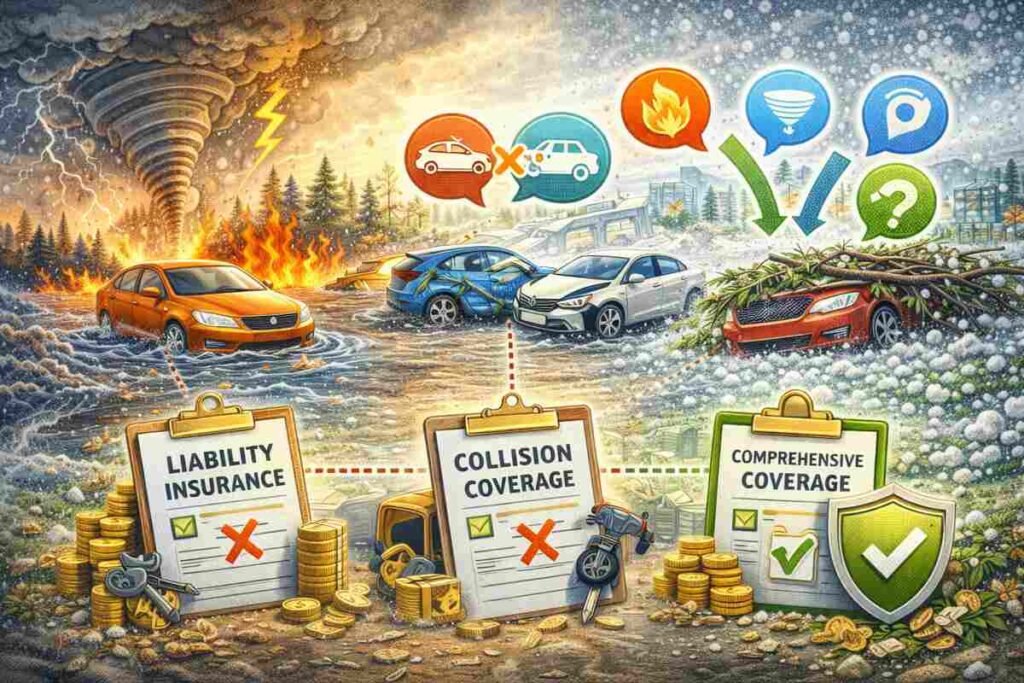
It depends on your coverage type.
Coverage Breakdown
- Liability insurance: ❌ No weather coverage
- Collision coverage: ❌ Only covers crashes
- Comprehensive coverage: ✅ Covers most weather-related damage
Weather damage is almost always handled under comprehensive insurance, not collision.
The Insurance Information Institute explains coverage distinctions clearly in its auto insurance guide.
Takeaway: Without comprehensive coverage, climate damage usually isn’t covered.
FAQ 3: What Types of Weather Damage Are Typically Covered?
With comprehensive coverage, most climate-related damage is included.
Commonly Covered Events
- Flood and flash flooding
- Hail damage
- Fire and wildfire exposure
- Falling trees or debris
- Windstorm damage
- Lightning strikes
Important: Coverage applies even if the vehicle is parked.
Takeaway: Comprehensive coverage protects against nature, not driving mistakes.
FAQ 4: What Weather-Related Damage Is Often Excluded?
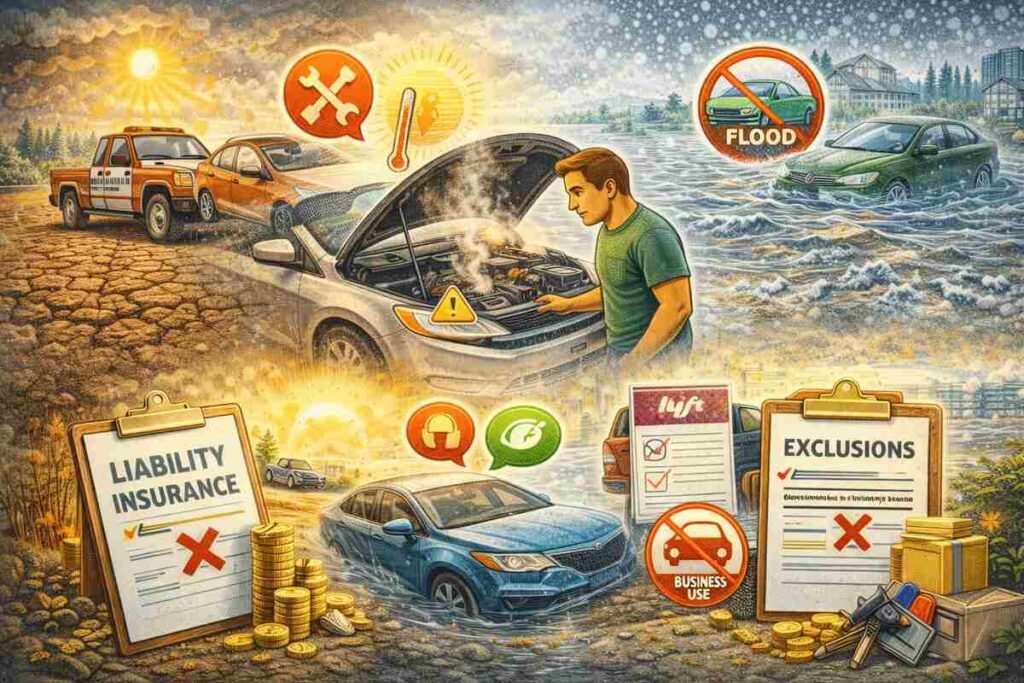
Not all climate-related losses are automatically covered.
Common Exclusions or Limitations
- Mechanical failure caused indirectly by weather
- Wear-and-tear worsened by heat
- Flood damage if comprehensive coverage was dropped
- Business-use exclusions for personal policies
Always review exclusions carefully.
The Consumer Financial Protection Bureau outlines policy exclusions in its insurance consumer guidance.
Takeaway: Coverage gaps are usually hidden in exclusions.
FAQ 5: How Do Floods Affect Car Insurance Claims?
Flood damage is one of the costliest climate-related losses.
Flood Claim Realities
- Water damage often totals vehicles
- Electrical systems are highly vulnerable
- Mold and corrosion issues may appear later
If floodwater reaches the engine or interior, insurers frequently declare a total loss.
The National Oceanic and Atmospheric Administration tracks flood trends and severity in its weather data resources.
Takeaway: Flood coverage is all-or-nothing, comprehensive matters.
FAQ 6: How Wildfires Are Changing Auto Insurance
Wildfires increasingly affect vehicles, not just homes.
Covered Wildfire-Related Damage
- Direct fire damage
- Smoke damage
- Heat-related melting or warping
- Ash contamination
However, wildfire-prone regions now face:
- Higher premiums
- Limited insurer availability
- Stricter underwriting
The National Interagency Fire Center provides data on wildfire frequency in its fire statistics.
Takeaway: Location increasingly determines insurability.
FAQ 7: Does Climate Risk Increase Car Insurance Premiums?
Yes, often significantly.
Why Premiums Rise
- More frequent comprehensive claims
- Higher claim severity
- Regional loss concentration
- Reinsurance cost increases
According to Forbes Advisor research, climate-related losses are a growing contributor to premium inflation.
Takeaway: Climate risk affects everyone’s rates, not just those filing claims.
FAQ 8: Can Insurers Refuse Coverage Due to Climate Risk?
In some high-risk areas, yes.
What’s Happening in 2026
- Insurers exiting flood- or fire-prone regions
- Higher deductibles for comprehensive claims
- Policy non-renewals based on geographic risk
The National Association of Insurance Commissioners discusses insurer availability issues in its consumer alerts.
Takeaway: Availability is becoming as important as affordability.
FAQ 9: How Can Drivers Reduce Climate-Related Risk?
You can’t control the weather, but you can reduce exposure.
Practical Risk-Reduction Tips
- Park in covered or elevated areas
- Avoid driving during severe weather warnings
- Use weather alert apps
- Maintain drainage around parking areas
- Consider higher comprehensive deductibles carefully
The Federal Emergency Management Agency offers preparedness advice in its flood and storm resources.
Takeaway: Prevention lowers claim risk and stress.
FAQ 10: Are Electric Vehicles Affected Differently by Climate Risk?
Yes, both positively and negatively.
EV-Specific Climate Considerations
- Batteries vulnerable to extreme heat and flooding
- Lower mechanical fire risk
- Specialized repair requirements
As climate risk grows, EV insurance pricing is evolving separately from gas vehicles.
The International Energy Agency discusses climate impacts on EVs in its mobility analysis.
Takeaway: Climate risk interacts differently with vehicle technology.
Real-Life Example: A Climate Claim in Action
After a sudden hailstorm caused widespread vehicle damage, a driver with comprehensive coverage filed a claim digitally. Damage was assessed via photos, and repairs were approved within days.
A neighbor without comprehensive coverage paid entirely out of pocket.
Lesson: Climate resilience starts with coverage choices.
Comparison Table: Climate Events and Coverage
| Climate Event | Covered with Comprehensive? |
|---|---|
| Flood | Yes |
| Hail | Yes |
| Wildfire | Yes |
| Windstorm | Yes |
| Extreme heat wear | No |
| Mechanical failure | No |
Frequently Asked Questions (Quick Hits)
Is comprehensive coverage worth it in 2026?
Increasingly, yes.
Can I add comprehensive anytime?
Usually yes, before the event.
Do claims from weather raise rates?
Sometimes, depends on region and frequency.
Are climate risks insurable long-term?
Yes, but pricing and availability will change.
Final Thoughts
Climate risk is no longer a background factor in car insurance, it’s central. In 2026, weather-related damage influences premiums, coverage availability, and claim outcomes more than ever before.
For drivers, the most powerful protection is understanding your coverage before disaster strikes. Comprehensive insurance, informed choices, and proactive risk management can mean the difference between a manageable inconvenience and a financial setback.
As climate patterns continue to evolve, so must the way we insure mobility.
If this guide helped you understand climate risk and car insurance, share it or explore more forward-looking insurance insights on our blog.