
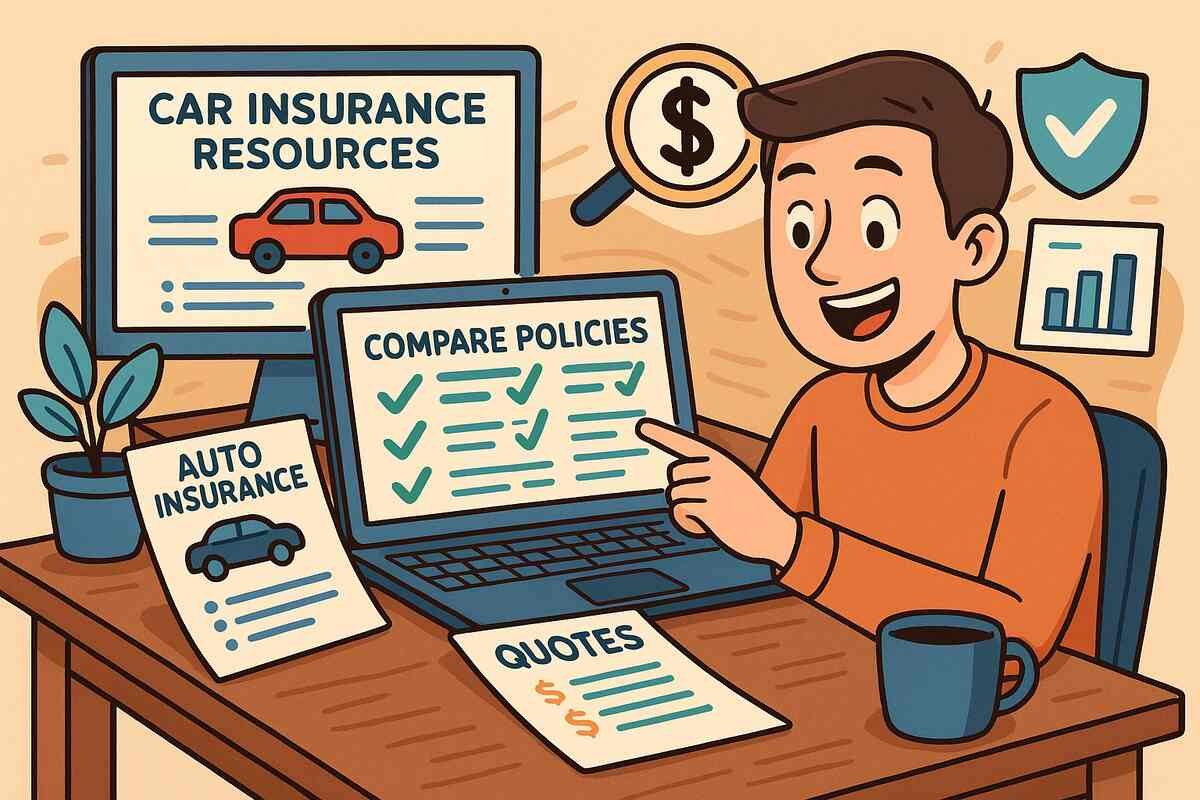

Why Comparing Car Insurance Matters More Than Ever

Buying car insurance can feel like navigating a maze—endless quotes, hidden fees, and confusing terms. Yet, this decision directly impacts your safety, finances, and peace of mind. According to Forbes Advisor, the average American driver spends over $1,700 per year on auto insurance. But here’s the secret: many pay far more than necessary because they don’t compare policies properly.
The right car insurance isn’t just about finding the lowest price—it’s about finding the best value. By using smart online resources and understanding key policy factors, you can protect yourself while cutting unnecessary costs. This guide walks you through the best car insurance resources for comparing policies and making informed, confident decisions.
1. Use Trusted Comparison Websites
Best for: Quick and transparent policy comparisons.
Comparison platforms simplify the process by gathering quotes from multiple insurers in one place. Instead of visiting each website individually, you can view multiple options side by side.
Top Resources:
- The Zebra — Known for accurate real-time quotes from top insurers.
- NerdWallet’s Car Insurance Tool — Provides tailored recommendations and financial advice.
- Insurify — Uses AI to match you with the best deals and discounts.
Example: Emily used The Zebra to compare five quotes within 10 minutes and saved $420 annually by switching providers.
Pro Tip: Always double-check that your coverage levels match when comparing. Otherwise, you might be comparing apples to oranges.
Takeaway: Comparison tools save time—and serious money.
2. Review State-Specific Insurance Databases
Best for: Local rate accuracy and regulatory information.
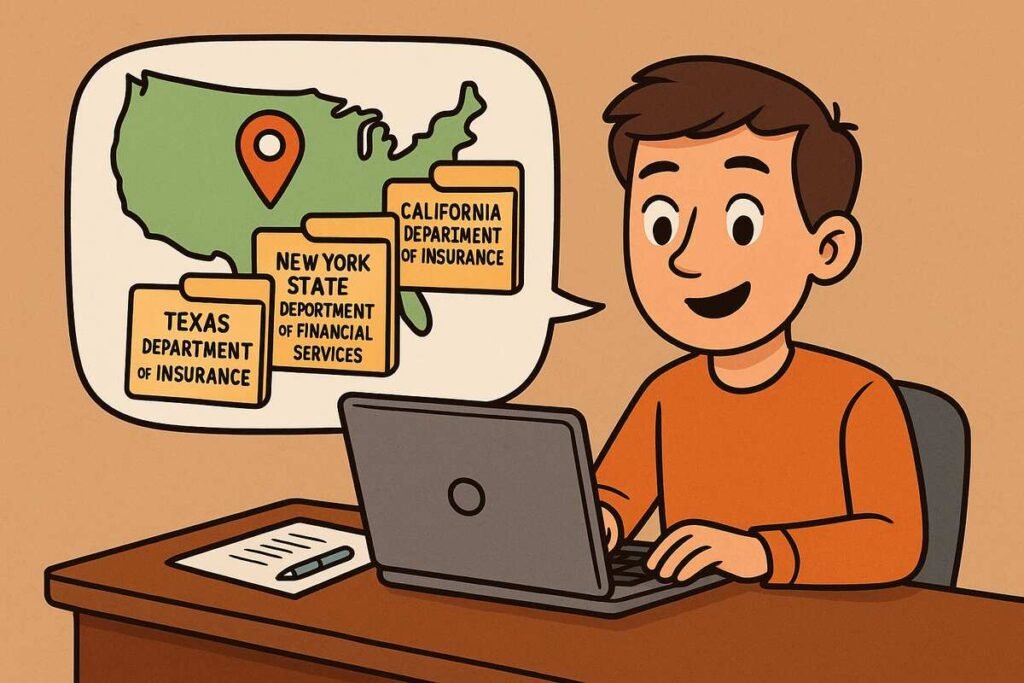
Each U.S. state has a Department of Insurance (DOI) that provides valuable resources for drivers. These databases help you see average rates, complaint histories, and insurer reliability.
Examples of Reliable Resources:
- California Department of Insurance
- New York State Department of Financial Services
- Texas Department of Insurance
How It Helps:
- Find verified rate comparisons by zip code.
- Check insurer complaint records and claim satisfaction scores.
- Access educational guides about state minimum coverage laws.
Pro Tip: Use your state’s database to confirm that your insurer is properly licensed and compliant.
Takeaway: Trusted government data ensures accuracy beyond marketing claims.
3. Use Financial Strength Ratings Before You Buy
Best for: Ensuring your insurer can pay claims.
An affordable premium means nothing if your insurer struggles to pay out claims. Always check the company’s financial strength rating before purchasing.
Top Rating Agencies:
- A.M. Best — Specializes in insurance company stability.
- Standard & Poor’s — Provides detailed risk analysis.
- Moody’s — Rates long-term financial security.
Example: Before purchasing a policy, Jason checked his insurer’s A.M. Best rating and discovered it was below “B.” He chose another provider and later avoided dealing with delayed claims.
Pro Tip: Always choose an insurer rated “A” or higher to ensure reliability during claims.
Takeaway: Financial stability equals claims reliability.
4. Compare Coverage, Not Just Cost
Best for: Avoiding underinsurance.
It’s tempting to go for the cheapest option—but that can backfire when accidents happen. Instead, evaluate what’s actually covered in your plan.
Coverage Elements to Compare:
- Liability limits — Minimums may not be enough in severe accidents.
- Collision and comprehensive — Protects against physical damage and theft.
- Medical coverage — Covers injuries for you and passengers.
- Uninsured motorist protection — Vital in states with many uninsured drivers.
Example: Tina saved $20 a month by cutting comprehensive coverage. When her car was later damaged by hail, she paid $1,500 out of pocket.
Pro Tip: Use Bankrate’s Coverage Calculator to find the right balance between cost and protection.
Takeaway: Smart insurance shoppers balance affordability with safety.
5. Explore Customer Reviews and Claim Satisfaction Scores
Best for: Real-world insight into insurer reliability.
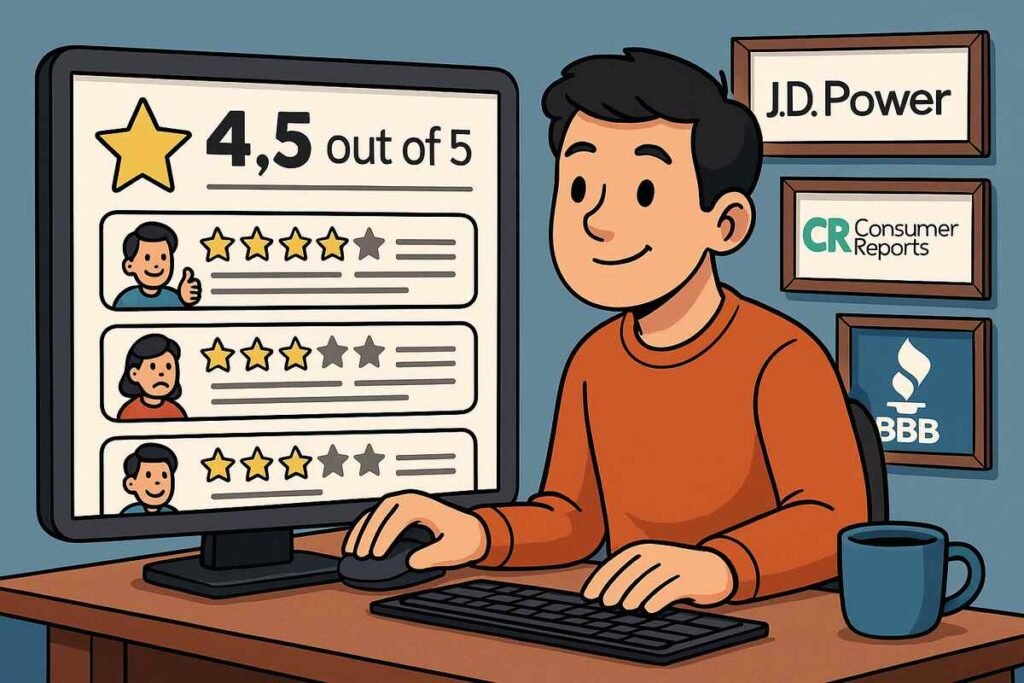
Policy fine print tells part of the story—customer experience tells the rest. Reviews reveal how companies handle claims, billing, and customer support.
Top Review Sources:
- J.D. Power Car Insurance Study — Ranks insurers by satisfaction and service.
- Consumer Reports — Offers unbiased customer experience ratings.
- Better Business Bureau (BBB) — Highlights complaint resolution quality.
Example: Rachel compared customer satisfaction scores for her top three providers and chose one with the highest claim support rating. Months later, when she had a minor accident, her claim was settled in 72 hours.
Pro Tip: Focus on claim resolution speed and communication quality.
Takeaway: Reviews reveal what pricing alone can’t.
6. Take Advantage of Comparison Spreadsheets
Best for: Organizing multiple quotes and coverage options.
When reviewing multiple providers, details can quickly blur. Creating a comparison spreadsheet helps visualize the differences.
How to Build It:
| Provider | Annual Premium | Deductible | Liability Limits | Customer Rating | Discounts Offered |
|---|---|---|---|---|---|
| Company A | $1,250 | $500 | 100/300/100 | 4.5/5 | Multi-policy, Safe Driver |
| Company B | $1,400 | $1,000 | 50/100/50 | 4.2/5 | Low-mileage, Loyalty |
| Company C | $1,180 | $750 | 100/300/100 | 4.7/5 | Bundling, Defensive Driving |
Pro Tip: Use Google Sheets or Excel to track updates, renewal dates, and new quotes each year.
Takeaway: Organization turns confusion into clarity.
7. Consult Independent Insurance Agents
Best for: Personalized advice and complex coverage needs.
Independent agents work with multiple insurers—not just one—giving you access to broader options and tailored guidance.
Benefits of Using an Independent Agent:
- They compare policies for you.
- They understand local regulations and risks.
- They can negotiate better discounts and custom bundles.
Example: The Gonzalez family used an independent agent to combine three vehicles and a renters policy, saving $600 annually while increasing liability coverage.
Pro Tip: Ensure your agent is licensed by checking your state’s insurance department website.
Takeaway: Expert advice saves time and reduces costly mistakes.
Real-Life Story: How One Driver Saved $900 by Comparing Smartly
When Kevin’s premium increased unexpectedly, he decided to use multiple comparison resources. He checked The Zebra, verified financial ratings through A.M. Best, and reviewed J.D. Power’s satisfaction rankings. By switching providers and bundling his home policy, he saved $900 annually—with better coverage.
Lesson: The smartest insurance shoppers use data, not guesswork.
Comparison Table: Top Tools for Smarter Insurance Shopping
| Resource Type | Platform | Best Use | Key Benefit |
|---|---|---|---|
| Quote Comparison | The Zebra, Insurify, NerdWallet | Finding cheap, reliable quotes | Saves time and money |
| State Database | Department of Insurance | Local data and regulation checks | Ensures insurer legitimacy |
| Financial Ratings | A.M. Best, Moody’s | Assessing insurer strength | Avoid unreliable providers |
| Customer Reviews | J.D. Power, BBB | Understanding real-world service | Reveals true claim reliability |
| Independent Agents | Local brokers | Personalized support | Custom coverage and discounts |
Frequently Asked Questions About Car Insurance Resources
1. How often should I compare car insurance quotes?
At least once a year—or whenever your policy renews or life circumstances change.
2. Is it safe to use comparison websites?
Yes. Stick to trusted platforms like The Zebra, Insurify, or NerdWallet that protect user data and avoid spam.
3. Can switching insurers affect my credit or coverage?
No. As long as you maintain continuous coverage, switching has no negative impact.
4. Are independent agents better than online tools?
For complex situations or multiple policies, independent agents can often find better custom solutions.
5. How do I know if a company is legitimate?
Check the insurer’s license status through your state’s Department of Insurance and verify their financial rating with A.M. Best.
Final Thoughts
Choosing the right car insurance policy shouldn’t be overwhelming. With these reliable resources—comparison websites, official state tools, and expert insights—you can confidently find the best coverage for your needs. Remember, smart insurance shopping is about more than cost; it’s about trust, transparency, and long-term protection.
If this article helped you navigate car insurance comparisons, share it with others or explore more expert tips on our blog.