

Introduction
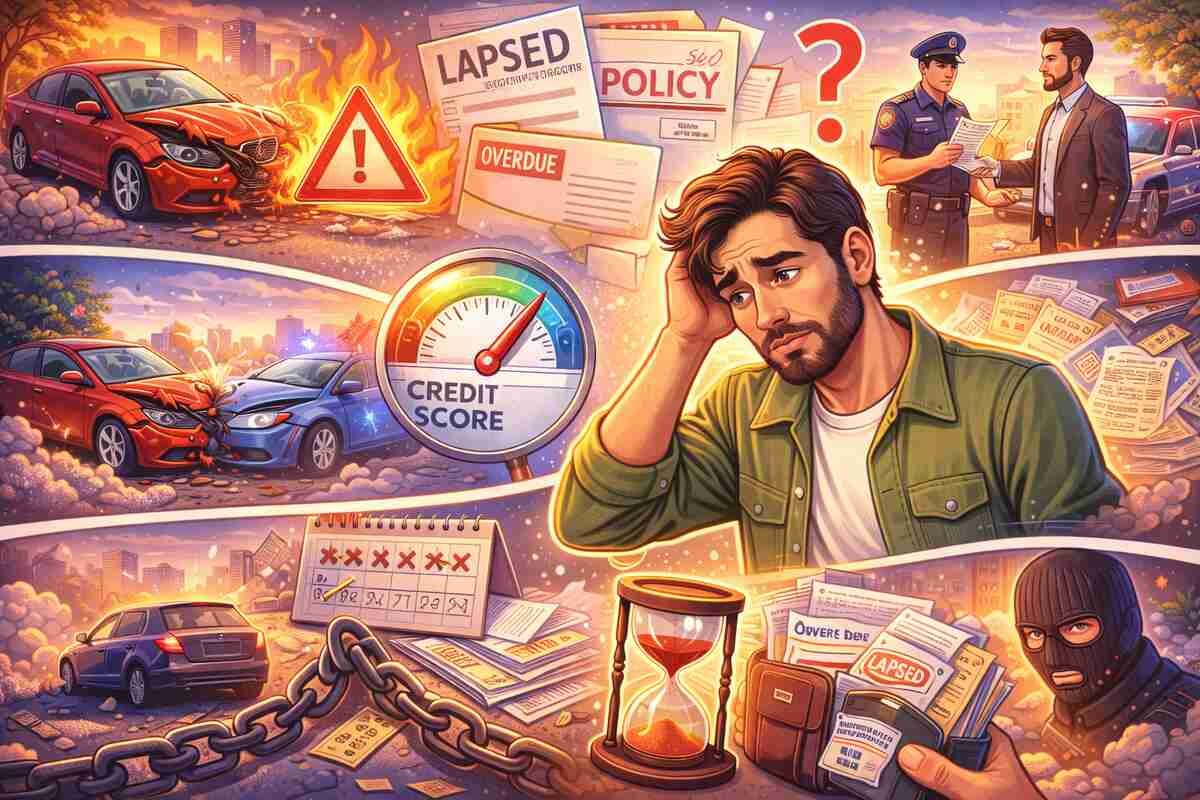
Car Insurance Lapse FAQs explain why even a short break in coverage can become one of the most expensive mistakes a driver makes. A lapse may seem minor, a missed payment, a delayed renewal, or a brief gap between policies, but the financial and legal consequences can follow you for years.
According to the Insurance Information Institute, coverage lapses are a leading reason drivers face premium increases, reduced coverage options, and policy denials. What makes lapses especially dangerous is that many drivers don’t feel the impact immediately. The real cost often appears months or even years later through higher rates, stricter underwriting, and fewer affordable choices.
This article answers the most important questions about insurance lapses by exposing five dangerous, costly, and often hidden consequences you can avoid and by showing how to protect your coverage and financial stability.
What Is an Insurance Lapse?
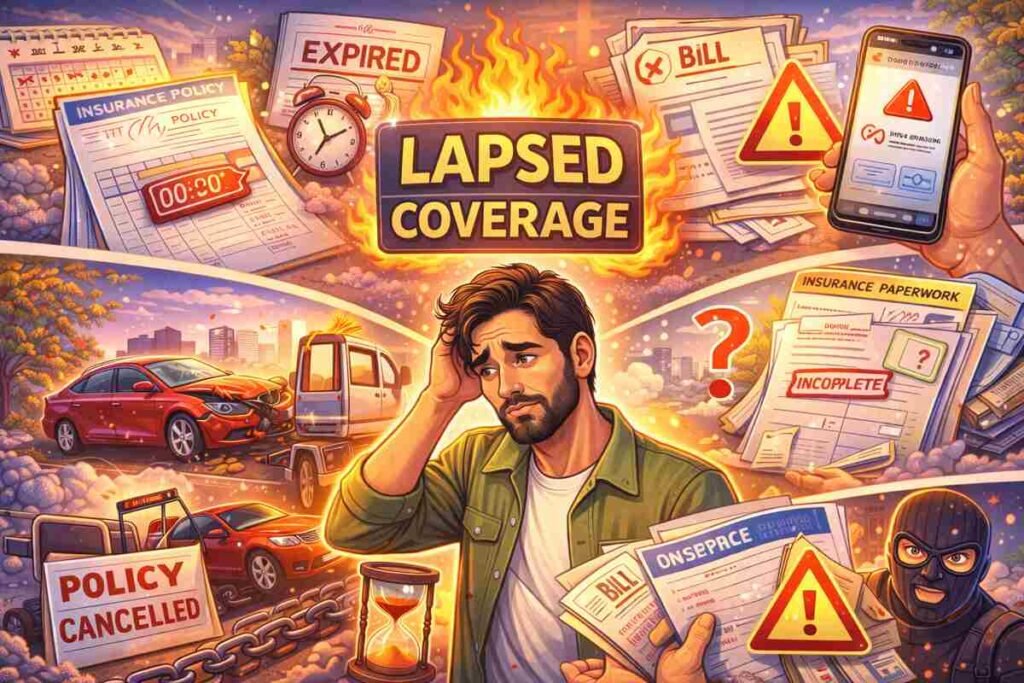
An insurance lapse occurs when your car insurance coverage is inactive for any period of time. This can happen when:
- A policy expires before renewal
- A payment is missed
- A policy is canceled before new coverage begins
- Insurer paperwork is incomplete
Even a single day without coverage counts as a lapse.
Consequence 1: Higher Premiums for Years
One of the most immediate impacts of a lapse is increased pricing.
Market analysis from The Zebra shows that drivers with prior lapses are considered higher risk, often paying substantially more than continuously insured drivers.
Why this happens:
- Insurers view lapses as instability
- Higher probability of uninsured driving
- Greater perceived claims risk
This penalty can follow you long after coverage is restored.
Consequence 2: Policy Rejections and Limited Options
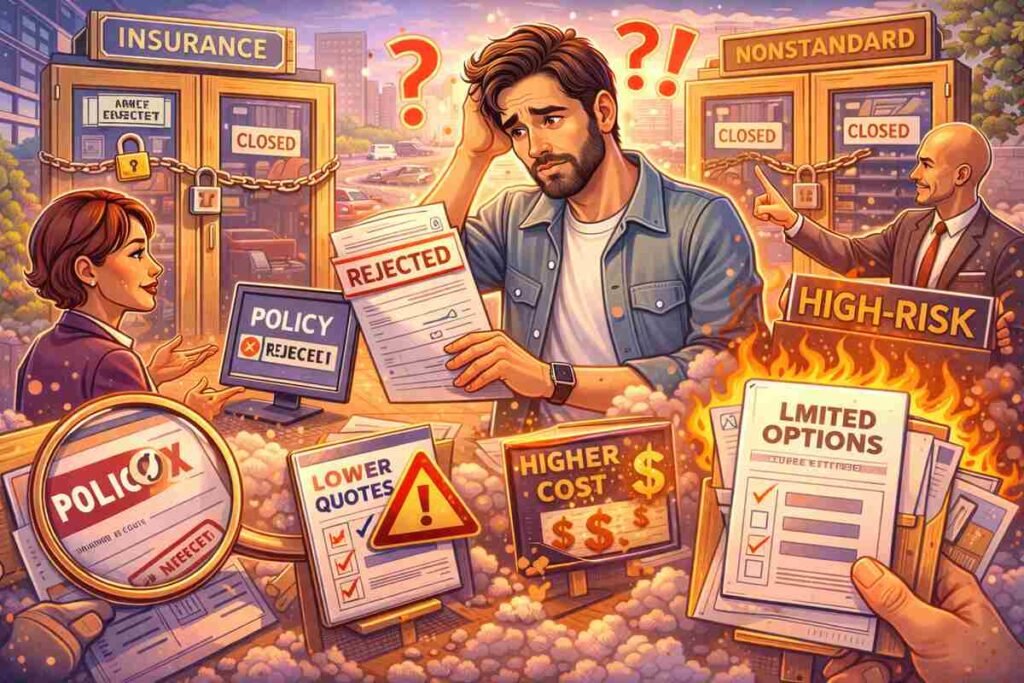
A lapse doesn’t just raise prices, it reduces access.
According to ValuePenguin, some insurers decline applications from drivers with recent lapses, forcing them into higher-cost or non-standard markets.
Results include:
- Fewer competitive quotes
- Higher deductibles
- Reduced coverage options
Choice disappears quickly after a lapse.
Consequence 3: Legal and Financial Liability Exposure
Driving uninsured, even unintentionally, creates major legal risk.
State guidance summarized by the National Association of Insurance Commissioners explains that uninsured drivers may face fines, license suspension, and personal liability for accident damages.
Potential costs:
- Medical bills
- Vehicle repairs
- Legal judgments
Without insurance, these expenses come directly from your assets and income.
Consequence 4: Loss of No-Claim and Loyalty Benefits
Insurance history matters.
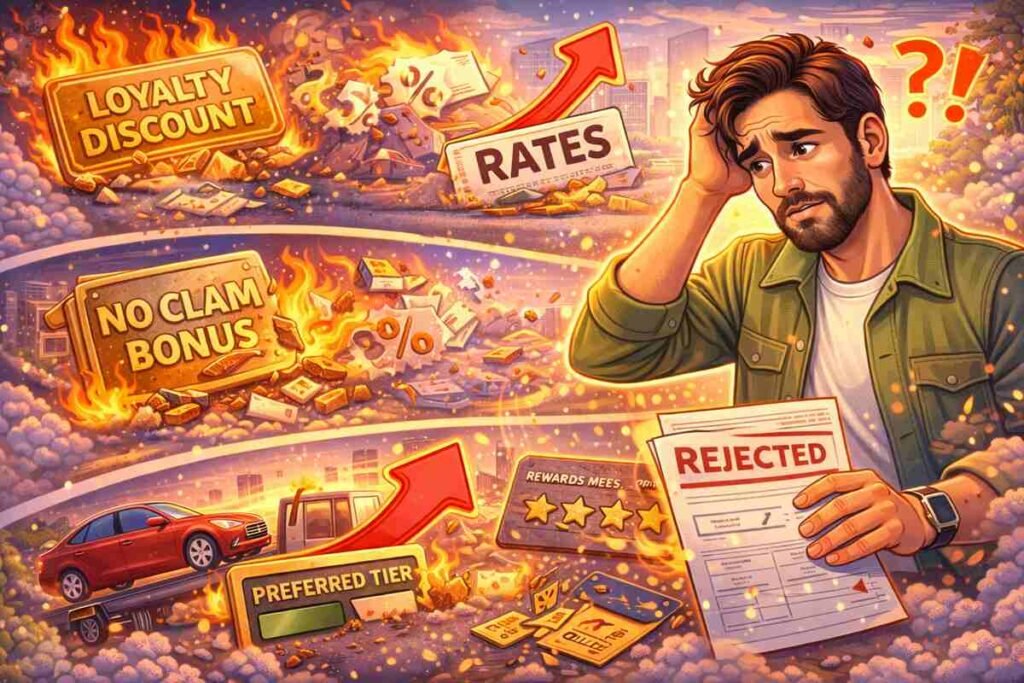
Resources from NerdWallet confirm that lapses often reset no-claim bonuses and loyalty discounts built over years.
Impact:
- Discount loss
- Higher renewal rates
- Slower recovery to preferred pricing tiers
Progress is erased almost instantly.
Consequence 5: Forced Insurance on Financed Vehicles
If your car is financed or leased, a lapse can be especially costly.
Lender guidance highlighted by Forbes Advisor explains that lenders may apply force-placed insurance, which is far more expensive and offers limited protection.
What this means:
- Premiums added to your loan
- No shopping or customization
- Higher long-term vehicle costs
This is one of the most painful financial results of a lapse.
Frequently Asked Questions
How long does a lapse affect insurance pricing?
Typically 3–5 years, depending on the insurer.
Is a short lapse really harmful?
Yes. Even 24 hours without coverage can impact risk scoring.
Can I fix a lapse?
Yes—by restoring coverage immediately and maintaining consistency.
How to Prevent an Insurance Lapse
- Enable automatic payments
- Track renewal dates
- Never cancel before new coverage starts
- Keep written proof of policy activation
Prevention is far cheaper than recovery.
Final Thoughts
Car insurance lapses are silent financial traps. The five consequences outlined above reveal how a brief gap can trigger years of higher costs, reduced options, and legal exposure.
Maintaining continuous coverage is one of the simplest and most powerful financial protections a driver can have.
In auto insurance, consistency is security.