


Driving Abroad in 2026? Here’s What Every International Driver Must Know

If you’re planning to drive in another country in 2026, whether for travel, temporary relocation, work, or study, understanding car insurance for international drivers is essential. Regulations are tightening, documentation standards are changing, and insurers are using more digital verification tools than ever.
According to a 2025 mobility study from Harvard Business Review, nearly 38% of global travelers expect to drive abroad at least once per year. Yet most are unaware of updated insurance requirements that could affect their eligibility, coverage limits, or legal responsibilities.
This complete guide walks you through the new 2026 rules, documentation requirements, types of international driver insurance, and the most important FAQs all in clear, practical language.
Why Car Insurance Rules for International Drivers Are Changing in 2026
Countries across the world are modernizing their driving regulations to improve road safety and streamline verification.
Key Reasons Behind the Updates
- Increased global mobility and digital nomad travel
- Growing number of international temporary residents
- Rise of online insurance fraud
- Better digital identification systems
- Increased road-safety initiatives in major travel destinations
Example: A country that once allowed foreign drivers to use domestic insurance for 90 days now requires proof of international coverage after 30 days.
Reference: The Insurance Information Institute notes that cross-border insurance rules continue to evolve alongside global travel trends.
Takeaway: Staying updated on changing regulations helps prevent fines, denied claims, and travel disruptions.
1. What Insurance Do International Drivers Need in 2026?
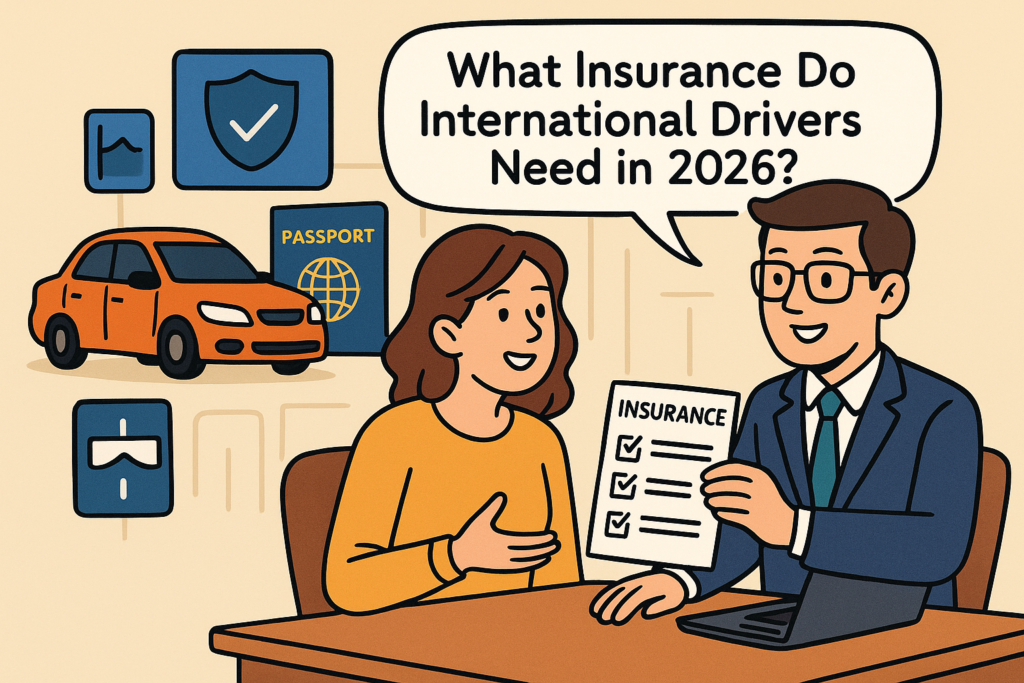
Depending on where you’re traveling, you’ll need one or more of the following:
Essential Coverage Types
- Rental Car Insurance (collision, liability, theft)
- International Auto Insurance Policy (for personal vehicles abroad)
- Border Insurance (mandatory in some regions)
- Supplemental Liability Insurance (to increase protection limits)
- Tourist or Temporary-Resident Coverage
Why It Matters
Local law enforcement can require proof of insurance at any time.
Example: Drivers renting a car in Spain, Thailand, or Australia must carry basic liability coverage that meets that country’s legal minimums.
Takeaway: Don’t assume your home-country insurance follows you often, it doesn’t.
2. Do You Need an International Driving Permit (IDP)?
In many countries, yes.
When an IDP Is Required
- When your license is not in English
- When local law mandates a translated license
- When renting a car from major agencies
- In regions with stricter verification (EU, parts of Asia)
What an IDP Does
- Translates your license into 10+ languages
- Verifies your home-country driving status
- Helps avoid legal issues in traffic stops
Reference: The National Highway Traffic Safety Administration stresses that unfamiliar road systems and language barriers make formal translation tools essential.
Takeaway: An IDP makes travel smoother and is required more often than people think.
3. Does Your Domestic Car Insurance Cover You Abroad?
Usually not.
Common Misunderstandings
- U.S., Canadian, and Australian auto policies typically do not cover driving outside their regions.
- Credit card rental coverage often excludes certain countries.
- Liability requirements abroad may exceed your card’s coverage.
Example: A traveler renting a car in Italy quickly discovers that U.S. credit-card coverage does not meet required liability limits.
Takeaway: Always confirm whether your domestic insurer extends international privileges.
4. What Coverage Is Required When Renting a Car Abroad?
Rental companies typically require:
Mandatory Coverage
- Third-party liability insurance
- Collision damage waiver (CDW)
- Theft protection
Some countries include liability in the rental price; others require separate purchase.
Optional Add-Ons
- Personal accident insurance
- Supplemental liability (extra protection)
- Zero-deductible coverage
Reference: A Forbes Advisor rental insurance guide confirms that liability insurance is the most commonly required coverage globally.
Takeaway: Always read what’s included, rental packages vary widely.
5. Do International Drivers Pay Higher Insurance Rates?
Often, yes.
Why Premiums May Increase
- Lack of country-specific driving history
- Higher collision rates among tourists
- Unfamiliar road systems
- Increased administrative verification
Example: A visitor renting in Portugal may pay more for supplemental liability because insurers cannot verify their long-term driving record.
Takeaway: Expect slightly higher rates, especially on short-term coverage.
6. How Do Digital Tools Help International Drivers in 2026?
Digital insurance platforms are making cross-border travel easier.
Benefits of Digital Insurance Tools
- Instant policy purchase before arrival
- Mobile ID cards accepted by many rental agencies
- AI customer support for claim assistance
- Real-time document verification
Example: A traveler uploads their IDP and passport into the insurer’s portal and receives instant coverage approval.
Reference: The Cleveland Clinic highlights how digital verification improves transparency.
Takeaway: Digital-first insurers reduce hassle dramatically.
7. What Should International Drivers Do After an Accident Abroad?
Accidents abroad can be overwhelming, but following proper steps ensures smoother processing.
Steps to Follow
- Ensure everyone is safe.
- Contact emergency services.
- Photograph the scene, vehicle, and documents.
- Report to your rental company or insurer.
- Submit a digital claim with evidence.
Important Note
Laws vary—some countries require drivers to stay until authorities arrive.
Example: In certain regions of Europe, failing to file an immediate report can void your coverage.
Takeaway: Know the local protocol before driving.
Real-Life Story: A Traveler Who Nearly Lost Coverage
Ana rented a car abroad assuming her credit card covered everything. After a minor collision, the rental agency informed her that:
- her credit card did not meet local liability requirements,
- she failed to purchase mandatory supplemental coverage,
- and her IDP was required but not presented.
She ended up paying $1,800 out of pocket.
Lesson: Preparation saves money and stress.
Comparison Table: Driving With vs Without Proper International Coverage
| Category | With Proper Coverage | Without Coverage |
|---|---|---|
| Legal Compliance | Fully compliant | High risk of fines |
| Accident Costs | Mostly covered | Major out-of-pocket expenses |
| Rental Approvals | Smooth | May be denied |
| Peace of Mind | High | Low |
Frequently Asked Questions for International Drivers in 2026
1. Is an International Driving Permit always required?
Not always, but highly recommended and increasingly mandatory.
2. Does my credit card fully protect me abroad?
Rarely, limits and exclusions apply.
3. Can I buy international coverage online?
Yes, most insurers offer instant purchase.
4. Does a traffic violation abroad affect my home-country license?
Sometimes, countries are increasing data-sharing agreements.
5. Should I take extra coverage when renting a car?
Yes, especially supplemental liability.
Final Thoughts
Driving abroad in 2026 opens the door to incredible travel opportunities, but only when you’re properly insured. Understanding international driving requirements, securing valid coverage, and preparing essential documents ensures safe, legal, stress-free travel.
If this guide helped you navigate international driving rules, share it or explore more global insurance resources on our blog.