
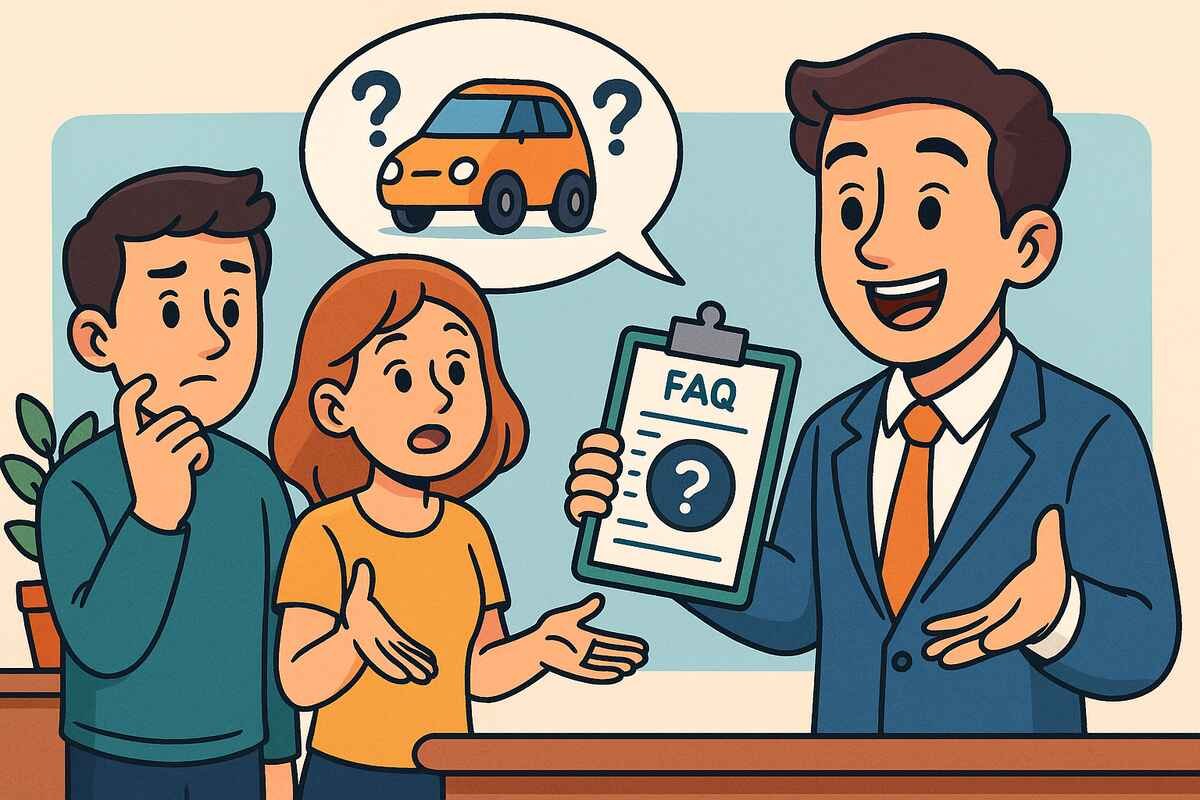

Why Car Insurance Questions Matter for Beginners

If you’re buying car insurance for the first time, the process can feel overwhelming. With countless providers, confusing terms, and different policy types, it’s hard to know where to start. That’s why we’ve created this beginner-friendly guide to answer the most common car insurance FAQs for beginners—so you can feel confident about your choices.
According to the Insurance Information Institute, understanding the basics of car insurance is the first step toward getting affordable and reliable coverage. Let’s break it down step by step with real-world examples and practical tips.
1. What Is Car Insurance and Why Do I Need It?
Car insurance is a contract between you and an insurance company. You pay a premium, and in return, the insurer helps cover costs if you’re involved in an accident or your car is damaged.
Why it matters:
- It’s required by law in most states.
- It protects you financially from repair bills, medical expenses, or lawsuits.
- It provides peace of mind every time you drive.
Example scenario: Imagine you cause a $15,000 accident. Without insurance, you would be personally responsible for paying all costs. With liability insurance, your insurer handles it, saving you from financial ruin.
2. What Types of Coverage Should Beginners Know About?
The main types include:
- Liability coverage: Pays for damage or injuries you cause to others.
- Collision coverage: Pays for your car’s repairs after an accident.
- Comprehensive coverage: Covers theft, fire, vandalism, and weather damage.
- Uninsured/underinsured motorist coverage: Protects you if the other driver has little or no insurance.
Example: If your parked car is damaged by hail, liability coverage won’t help—but comprehensive coverage will.
3. How Much Car Insurance Do I Need?
At minimum, you must meet your state’s legal requirements. But many experts recommend higher limits for better protection.
Example: Instead of the minimum liability coverage of 25/50/25 (per person/per accident/property), aim for 100/300/100 to avoid out-of-pocket costs if you cause a major accident.
4. Why Do Insurance Costs Differ So Much?
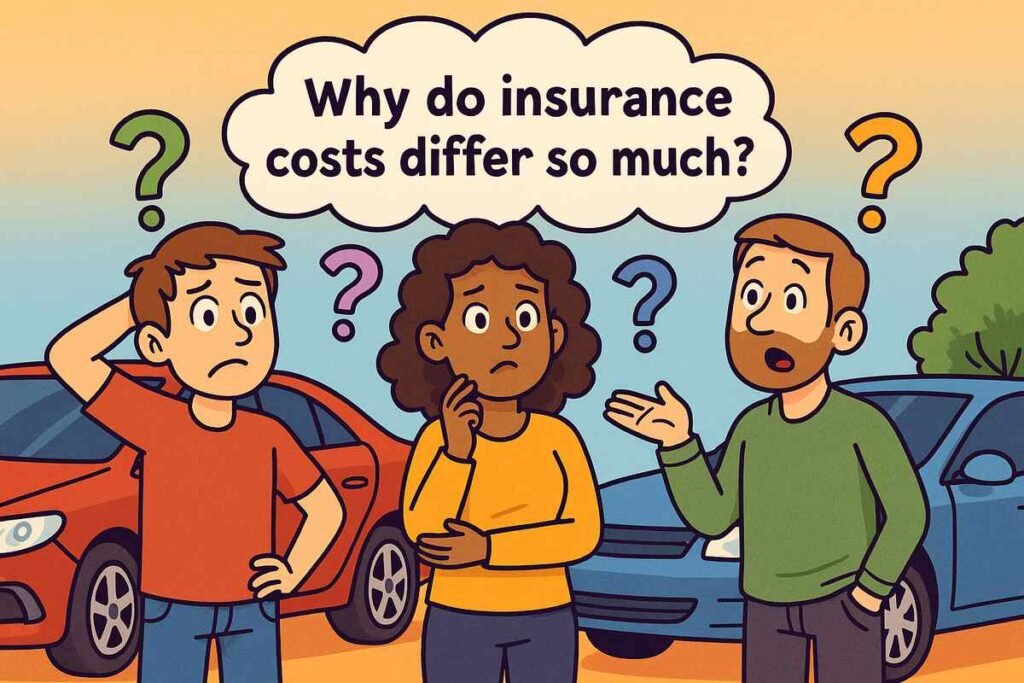
Premiums vary based on:
- Your age and driving experience.
- Your driving history (tickets, accidents).
- The type of car you drive.
- Where you live.
- Your credit score (in most states).
The National Association of Insurance Commissioners (NAIC) notes that shopping around is the best way to find affordable coverage.
Example: A 19-year-old with a new sports car in Los Angeles may pay $4,000 a year, while a 30-year-old with a safe sedan in a rural area may pay under $1,000.
5. How Can Beginners Lower Their Car Insurance Premiums?
- Compare multiple quotes before choosing a provider.
- Bundle auto insurance with renters or home insurance.
- Ask about discounts (good student, safe driver, low mileage).
- Raise your deductible if you can afford the out-of-pocket cost.
- Maintain a clean driving record.
Example: A college student with a 3.8 GPA might save 15% with a good student discount, while a remote worker who drives only 5,000 miles a year could qualify for low-mileage savings.
6. What Happens If I Drive Without Insurance?
Driving without insurance is illegal and risky.
Possible consequences:
- Heavy fines.
- License suspension.
- Vehicle impoundment.
- Full financial responsibility if you cause an accident.
Example: In Texas, first-time offenders may face fines of up to $350, while repeat offenders risk license suspension and surcharges.
7. Do I Need Full Coverage as a Beginner?
Not always. Full coverage is a good choice if you:
- Drive a newer or financed car.
- Want protection against theft and weather damage.
- Can’t afford to replace your car out-of-pocket.
For older, low-value cars, liability-only coverage might be enough.
Example: If your 15-year-old Honda Civic is worth $2,000, paying $800 annually for full coverage may not be worth it.
8. How Do Car Insurance Claims Work?
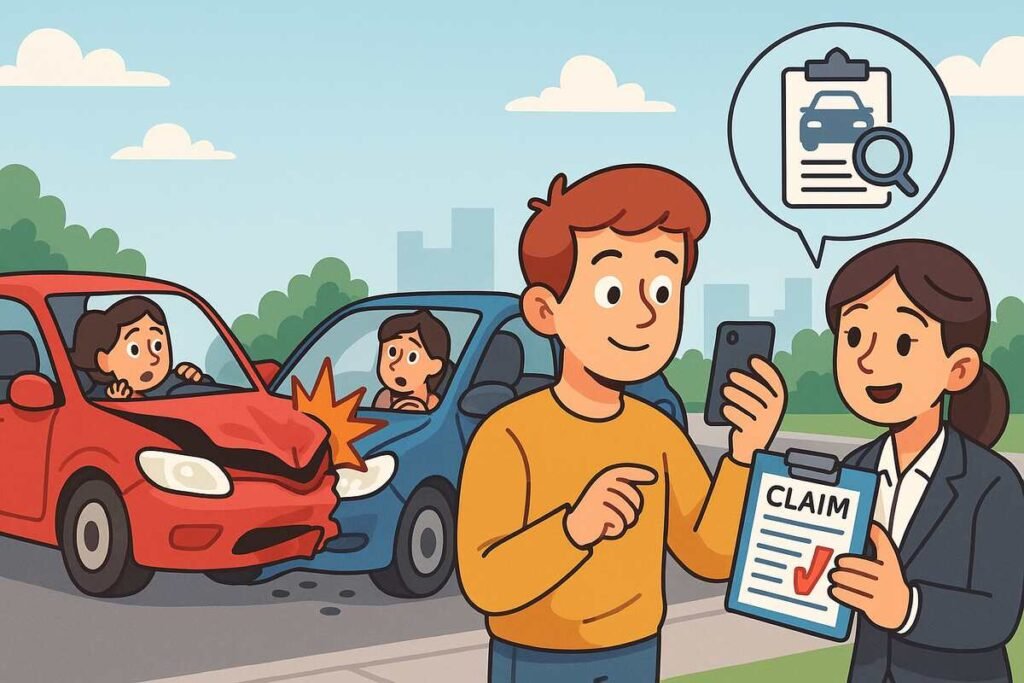
After an accident:
- Contact your insurance company immediately.
- Provide accident details and file a claim.
- An adjuster inspects the damages.
- Your insurer pays for covered repairs or medical bills.
Tip: Always take photos and gather witness statements for smoother processing.
Example: After a minor collision, your adjuster may approve $3,000 in repairs. You pay your $500 deductible, and the insurer covers the rest.
9. Does My Policy Cover Rental Cars?
Often yes, especially if you have comprehensive and collision coverage. Still, check with your insurer to be sure before renting.
Example: If your car is being repaired after an accident, your policy may cover the cost of a rental car for up to 30 days.
10. Will My Premiums Go Up If I File a Claim?
Usually yes, if you’re at fault. But many insurers offer accident forgiveness for your first claim.
Example: A driver with a spotless record for five years may file one claim without seeing any increase in their premium, depending on their insurer’s program.
Real-Life Beginner Scenarios
Scenario 1: A Teen Driver on a Parent’s Policy
Alex, a 17-year-old in Illinois, joins his parents’ insurance. Instead of paying $3,500 for his own policy, his addition to their plan costs only $1,200.
Scenario 2: A First-Time Car Buyer
Maria, age 25, buys her first car and opts for liability-only insurance. After comparing quotes, she saves nearly $600 annually by choosing a regional insurer over a national one.
Scenario 3: A College Student with a Good GPA
James, a full-time student, submits his transcripts and qualifies for a good student discount, lowering his premium by 12%.
Comparison Table: Car Insurance Basics for Beginners
| Question | Short Answer |
|---|---|
| What is car insurance? | A contract that protects you financially |
| What coverage types matter? | Liability, collision, comprehensive, uninsured motorist |
| How much do I need? | At least state minimum, ideally higher |
| Why are costs different? | Age, history, vehicle, location, credit |
| How to lower premiums? | Discounts, bundling, clean record |
| What if I drive uninsured? | Fines, suspension, liability risk |
| Do I need full coverage? | Yes for newer cars, maybe not for older ones |
| How do claims work? | Report, adjuster, payout |
| Does it cover rentals? | Often yes, confirm with insurer |
| Will premiums rise after claims? | Usually yes, unless forgiven |
Frequently Asked Questions About Car Insurance for Beginners
1. Do I need insurance before buying a car?
Yes. Most dealerships require proof of insurance before letting you drive away.
2. Can I stay on my parents’ policy?
Yes, many beginners save money by staying on a parent’s policy.
3. Does car color affect insurance rates?
No. That’s a common myth—insurers care about make, model, and safety ratings, not color.
4. How soon do I need to file a claim after an accident?
As soon as possible. Many insurers require claims within 24–48 hours.
5. What’s the difference between deductible and premium?
- Deductible: What you pay out-of-pocket in a claim.
- Premium: What you pay monthly or yearly for coverage.
6. Does my credit score affect premiums?
In most states, yes. Higher credit scores often mean lower premiums.
7. Are online-only insurers reliable?
Yes. Companies like Root and Lemonade offer competitive rates and customer-friendly apps.
8. Will my rates go down as I gain driving experience?
Yes. After 3–5 years of safe driving, most beginners see significant premium reductions.
Final Thoughts
For beginners, car insurance can feel intimidating. But once you understand the basics—coverage types, requirements, and how to save—it becomes much simpler. The key is to shop around, know your state’s laws, and choose coverage that balances affordability with protection.
By learning these car insurance FAQs for beginners, you’ll be prepared to make smarter decisions and drive with confidence.
If this article helped simplify car insurance, share it with friends and explore more beginner-friendly guides on our blog.