
Introduction
Car Insurance Coverage Gaps often go unnoticed until an accident, theft, or lawsuit reveals a costly surprise. Most drivers assume their policy fully protects them, but these gaps are common blind spots hidden in standard coverage limits, exclusions, and unchallenged assumptions.
According to the Insurance Information Institute, underinsurance and coverage misunderstandings are major reasons drivers face unexpected out-of-pocket costs after filing claims. In many cases, the financial impact isn’t minor, it can be devastating.
This article exposes five dangerous and costly car insurance coverage gaps, explains why they exist, and shows how to close them before they turn into real-world losses.
Why Coverage Gaps Are So Dangerous
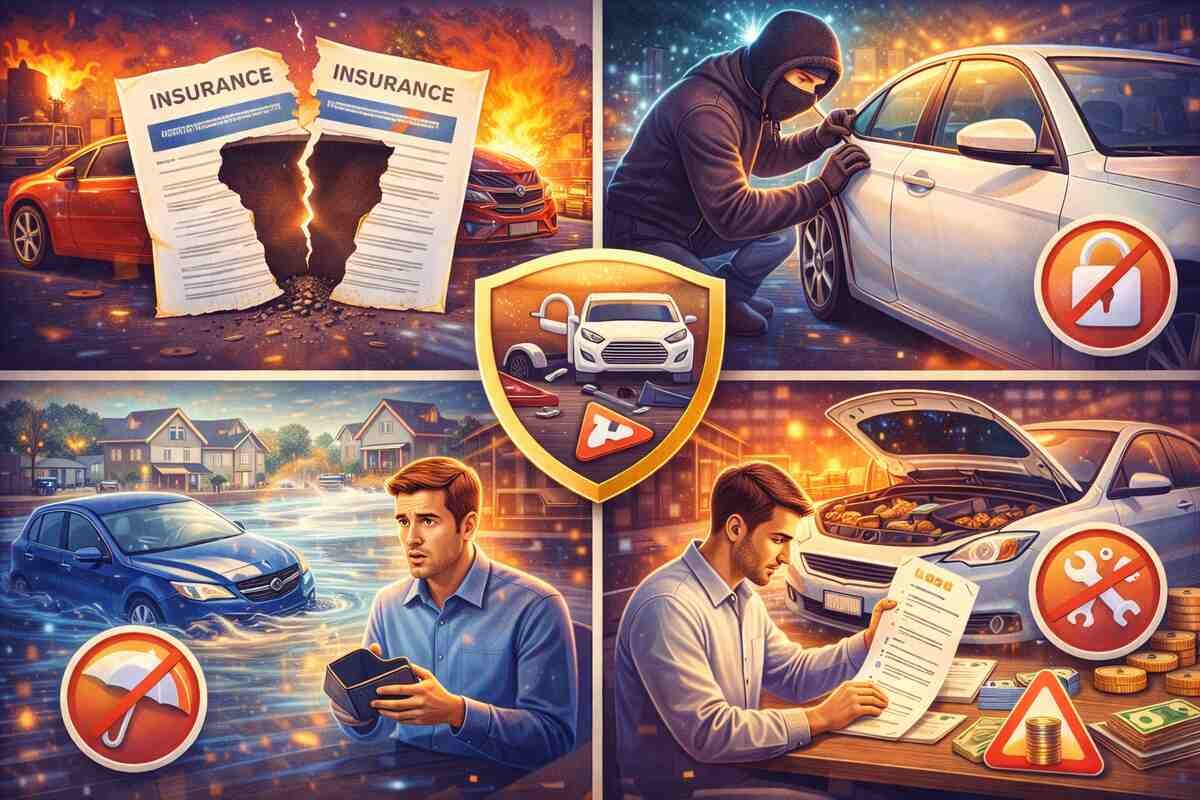
Insurance policies are written to cover specific risks, not every possible scenario. When life circumstances change new vehicles, new locations, new driving habits coverage often fails to keep up.
Coverage gaps can lead to:
- Denied claims
- Legal liability exposure
- Massive out-of-pocket expenses
- Policy cancellation or premium spikes
Understanding these risks is essential for protecting both your vehicle and your finances.
Risk 1: Inadequate Liability Coverage Limits

Minimum liability coverage is often dangerously insufficient.
Most states set minimum liability limits that barely cover minor accidents. Medical bills, vehicle damage, and legal costs can easily exceed these limits. Analysis from NerdWallet shows that serious accidents frequently surpass state minimum coverage by tens of thousands of dollars.
Why this gap is costly:
- You are personally responsible for costs beyond policy limits
- Wages and assets may be at risk
- Lawsuits can follow severe accidents
How to close the gap:
- Increase bodily injury and property damage limits
- Consider umbrella insurance for added protection
Low premiums today can create catastrophic exposure tomorrow.
Risk 2: Lapses in Coverage Between Policies
Even short insurance lapses create serious risk.
A coverage lapse can occur when switching insurers, missing payments, or canceling a policy before a new one starts. Data cited by The Zebra confirms that drivers with lapses face higher premiums and limited insurer options.
Consequences include:
- Higher future insurance costs
- Immediate uninsured driving risk
- Possible license suspension (state-dependent)
Prevention strategies:
- Ensure new coverage activates before cancellation
- Set up automatic payments
- Keep written proof of policy start dates
A single uninsured day can haunt your insurance record for years.
Risk 3: Exclusions for Business or Gig Use
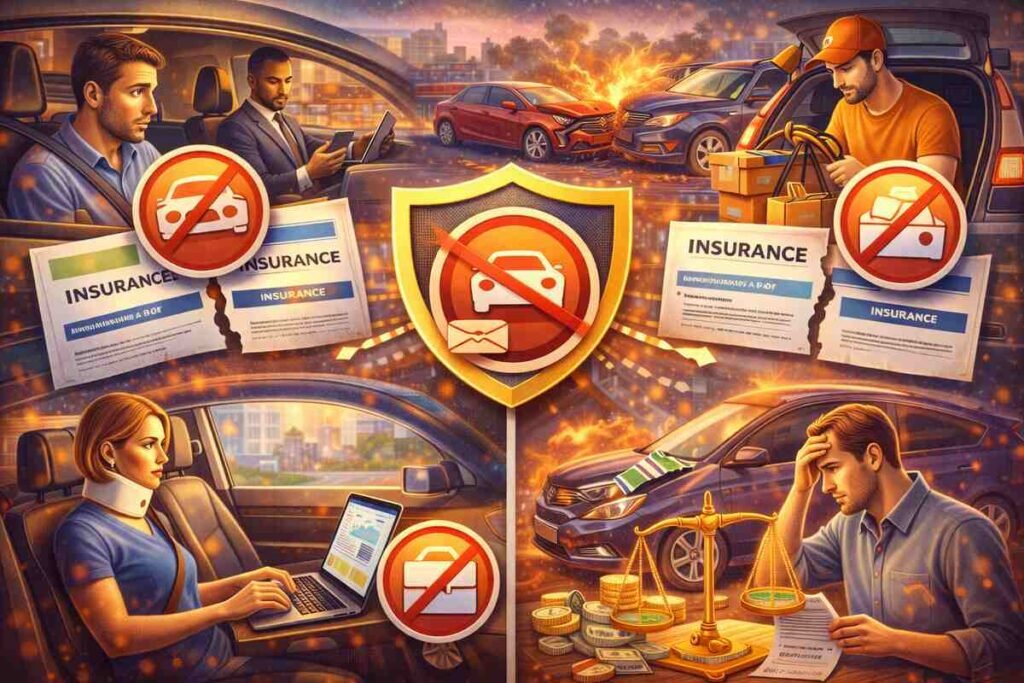
Personal auto policies often exclude business-related driving.
Drivers using their vehicles for ride-sharing, deliveries, or freelance work frequently assume they’re covered. However, standard policies typically exclude commercial use. Guidance from Allstate confirms that business use requires specific endorsements or separate policies.
Who is at risk:
- Rideshare drivers
- Delivery app workers
- Freelancers using personal vehicles
How to fix it:
- Add rideshare endorsements
- Upgrade to commercial auto coverage if needed
One uncovered accident can invalidate your entire claim.
Risk 4: Lack of Uninsured and Underinsured Motorist Coverage
Not every driver carries sufficient insurance or any at all.
Despite legal requirements, uninsured drivers remain common. According to the Insurance Research Council, roughly 1 in 8 U.S. drivers is uninsured.
Without uninsured/underinsured motorist (UM/UIM) coverage, you may pay for injuries and repairs caused by someone else.
Why this gap is dangerous:
- Medical expenses fall on you
- Legal recovery may be impossible
- Delayed or partial compensation
Solution:
- Add or increase UM/UIM coverage
- Match limits to your liability coverage
This protection is often inexpensive and highly valuable.
Risk 5: No Coverage for Non-Collision Damage
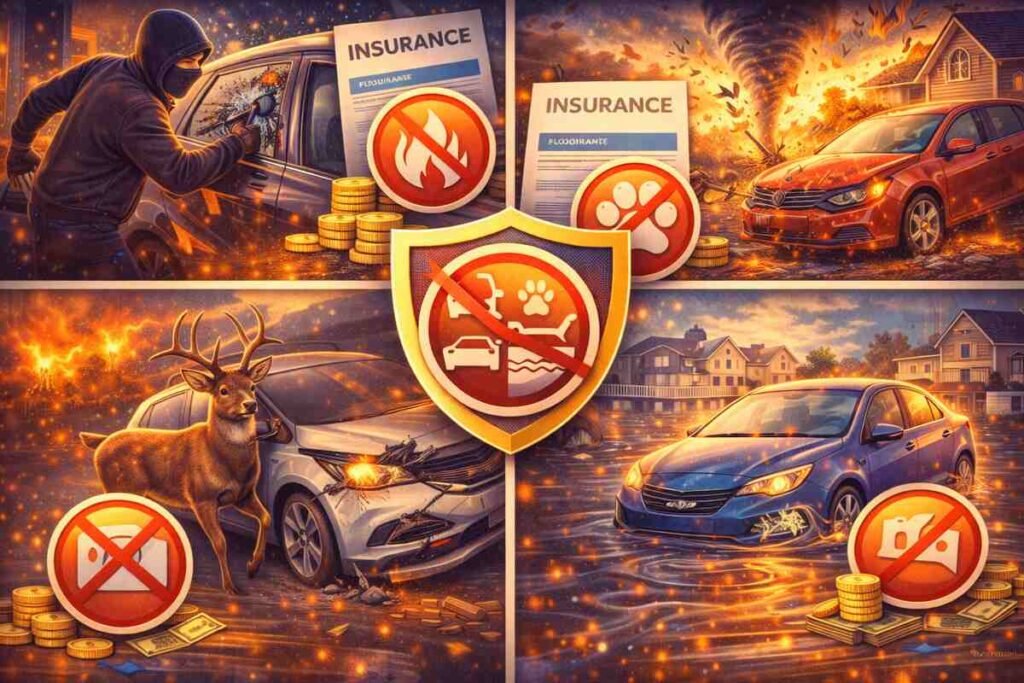
Many drivers misunderstand comprehensive coverage.
Damage from theft, vandalism, fire, floods, falling objects, or animal collisions is not covered by liability or collision insurance. According to Progressive, comprehensive coverage addresses these unpredictable risks.
Common uncovered losses:
- Stolen vehicles
- Storm or flood damage
- Animal-related accidents
How to protect yourself:
- Add comprehensive coverage
- Adjust deductibles strategically
Skipping comprehensive coverage can leave you exposed to losses you can’t control.
How Coverage Gaps Multiply Financial Risk
Coverage gaps rarely occur alone. A driver with low liability limits, no UM coverage, and a coverage lapse faces compounding risk.
Financial planners cited by Forbes Advisor emphasize that layered protection is the key to risk mitigation.
Insurance should act as a shield not a gamble.
How to Audit Your Car Insurance for Gaps
Conduct a coverage audit annually or after major life changes:
- Review liability limits
- Confirm active coverage dates
- Evaluate driving habits and usage
- Update add-ons and endorsements
Proactive reviews prevent reactive losses.
Final Thoughts
Car insurance coverage gaps are dangerous precisely because they’re invisible until it’s too late. The five risks exposed here are among the most common reasons drivers suffer denied claims, lawsuits, and severe financial damage.
By increasing liability limits, preventing lapses, securing proper endorsements, and adding key protections, drivers can transform insurance from a legal requirement into real financial security.
In auto insurance, what’s missing is often more important than what’s included.