

Introduction
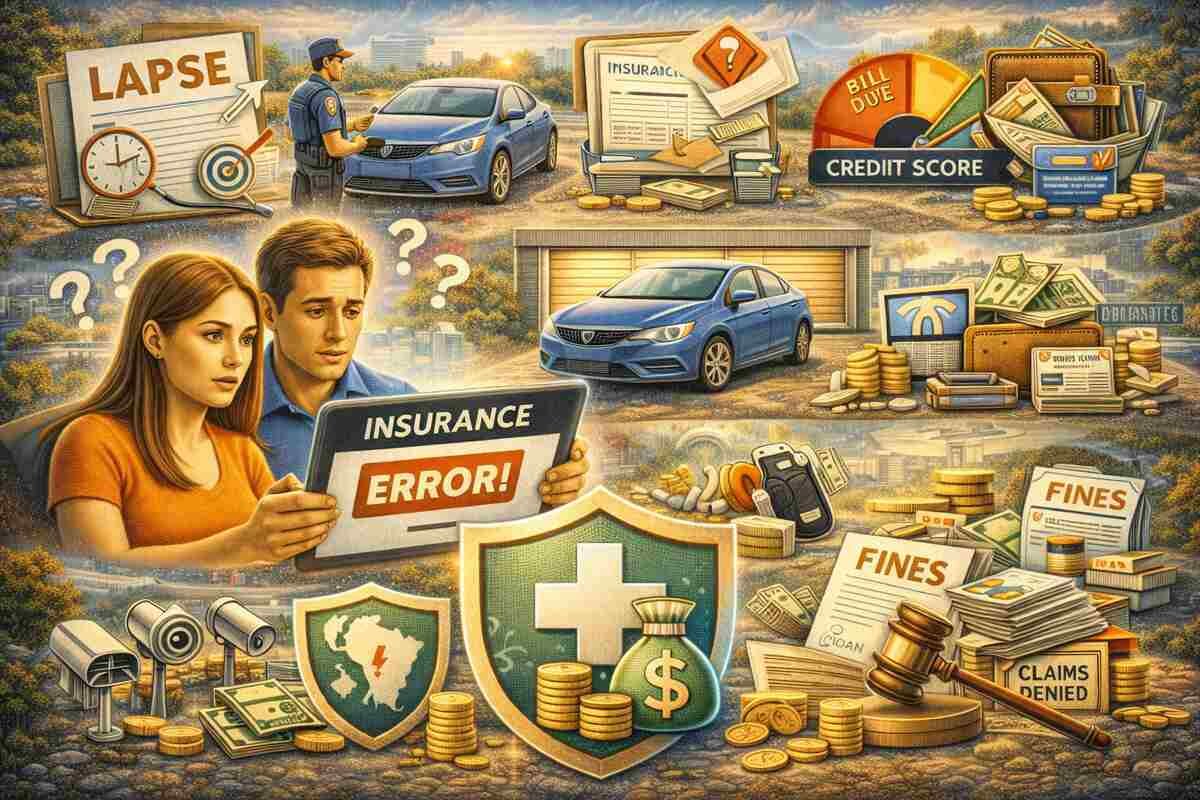
Car Insurance Cancellation FAQs address one of the most misunderstood and financially risky decisions drivers make. Canceling a car insurance policy may seem straightforward, but many policyholders do so without fully understanding the consequences, only to face penalties, coverage gaps, higher premiums, or even legal trouble.
According to the Insurance Information Institute, lapses in auto insurance coverage are a major factor behind increased premiums and policy rejections. What makes cancellations especially dangerous is that most mistakes are completely avoidable with the right information.
This article answers the most common car insurance cancellation questions by exposing seven shocking, costly, but avoidable errors. Understanding these pitfalls will help you cancel or switch policies safely without damaging your finances or future insurability.
Error 1: Canceling a Policy Before New Coverage Begins
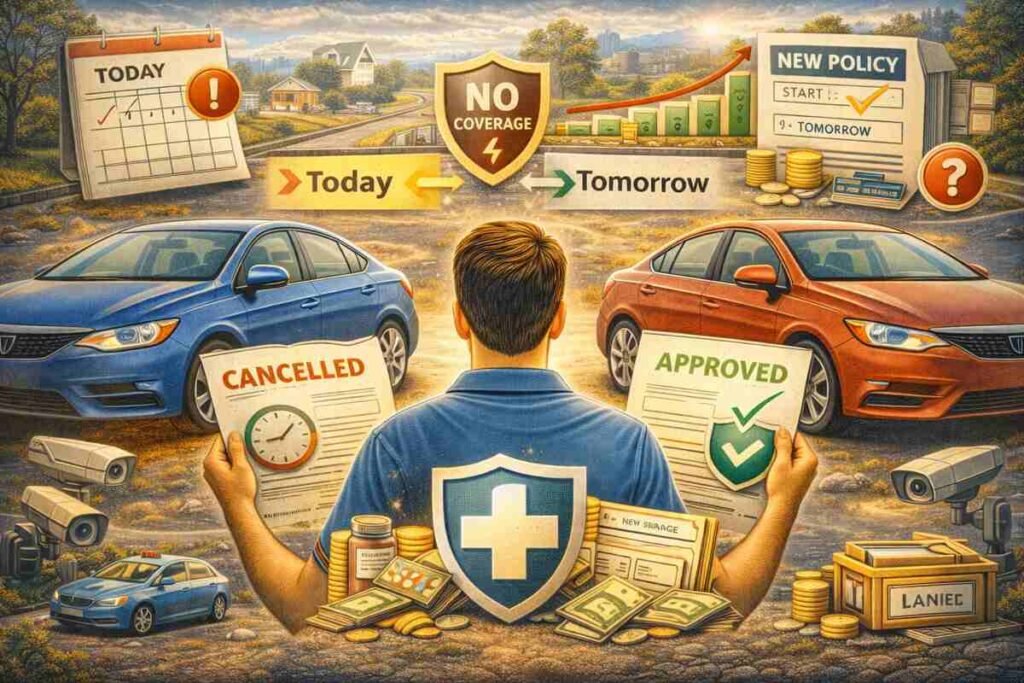
This is the most common and most expensive mistake.
Many drivers cancel their existing policy assuming their new insurance will activate immediately. However, even a single day without coverage can create a lapse that follows you for years. Research summarized by The Zebra shows that drivers with coverage gaps pay significantly higher premiums afterward.
Why this mistake is costly:
- Lapses are reported to insurers
- Premiums increase for future policies
- Some insurers may deny coverage altogether
How to avoid it:
- Ensure your new policy is active before canceling the old one
- Request written confirmation of coverage start dates
Never cancel first, replace first.
Error 2: Assuming Cancellation Is Automatic When You Stop Paying
Some drivers believe that simply not paying the premium will cancel the policy. This assumption is dangerous.
When payments stop, insurers usually initiate a non-payment cancellation, which is far worse than a voluntary cancellation. According to Experian, non-payment records negatively impact insurance risk profiles.
Consequences include:
- Additional late fees
- Negative insurance history
- Possible collections activity
Correct approach:
- Always request cancellation formally
- Follow the insurer’s documented cancellation process
Ignoring bills does not protect you, it damages your record.
Error 3: Forgetting to Cancel After Selling or Trading In a Vehicle
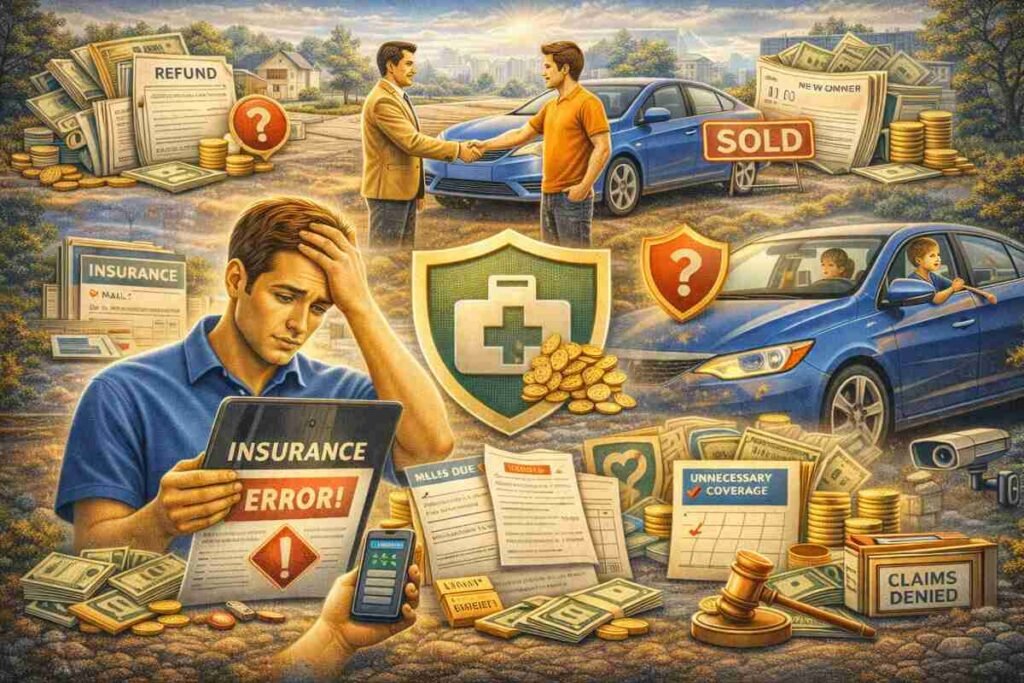
Selling a car does not automatically terminate your insurance policy.
Many drivers assume that transferring ownership ends coverage. In reality, the policy remains active until you cancel it. Guidance from Consumer Reports confirms that unnecessary premiums are commonly paid for months after a vehicle sale.
Why this matters:
- You may continue paying for unused coverage
- Liability risks can persist
- Refunds may not be retroactive
Best practice:
- Cancel or transfer coverage immediately after sale
- Provide proof of sale to your insurer
This small oversight can quietly drain your finances.
Error 4: Canceling Without Understanding Refund Rules
Not all cancellations result in full refunds.
Some insurers apply short-rate cancellation penalties, meaning you receive less than the unused premium. Others prorate refunds differently depending on state regulations. The National Association of Insurance Commissioners outlines how cancellation rules vary widely.
Potential surprises:
- Administrative fees
- Reduced refunds
- Delayed reimbursement timelines
What to do first:
- Ask about refund calculations
- Confirm whether penalties apply
- Request written confirmation
Knowing the rules prevents unpleasant surprises.
Error 5: Canceling a Financed or Leased Vehicle Policy Incorrectly
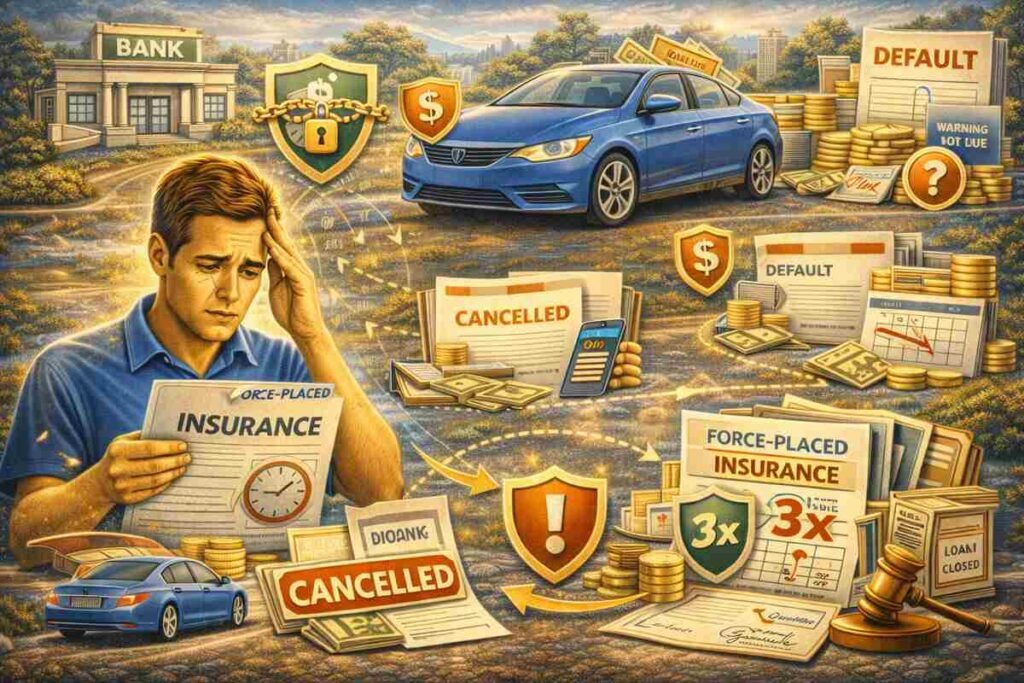
If your car is financed or leased, you cannot cancel insurance freely.
Lenders require continuous coverage to protect their asset. Canceling without lender approval can trigger force-placed insurance, which is significantly more expensive. According to NerdWallet, force-placed policies can cost two to three times more than standard coverage.
Risks include:
- Automatic policy replacement by the lender
- Higher premiums added to your loan
- Possible loan default issues
Always notify your lender before canceling or changing coverage.
Error 6: Canceling to Save Money Without Comparing Alternatives
Some drivers cancel policies purely to reduce expenses, without securing a better replacement.
Market analysis from ValuePenguin shows that switching insurers, rather than canceling outright is usually the most cost-effective strategy.
Why cancellation backfires:
- Loss of loyalty discounts
- Higher future premiums
- Limited insurer options
Smarter approach:
- Compare multiple quotes
- Negotiate with your current insurer
- Adjust coverage instead of canceling
Cancellation should be strategic, not impulsive.
Error 7: Failing to Obtain Written Proof of Cancellation
Verbal cancellations are risky.
Without written confirmation, disputes can arise over whether a policy was actually canceled. Documentation protects you from billing errors and liability claims. According to guidance from Allstate, written confirmation is essential for recordkeeping.
Protect yourself by:
- Requesting a cancellation confirmation email or letter
- Verifying the effective cancellation date
- Keeping records for several years
Proof is your only defense if problems arise later.
Frequently Asked Questions About Car Insurance Cancellation
Will canceling insurance hurt my credit?
Generally no, but non-payment cancellations may lead to collections.
Can I cancel at any time?
Yes, but penalties and refund rules may apply.
Is it better to switch or cancel?
Switching almost always results in better financial outcomes.
Final Thoughts
Car insurance cancellation is not just an administrative task, it’s a financial decision with lasting consequences. The seven errors outlined above are common, costly, and completely avoidable with proper planning.
By understanding cancellation rules, maintaining continuous coverage, and documenting every step, drivers can protect themselves from unnecessary penalties and premium hikes.
In auto insurance, how you cancel matters just as much as when you buy.