
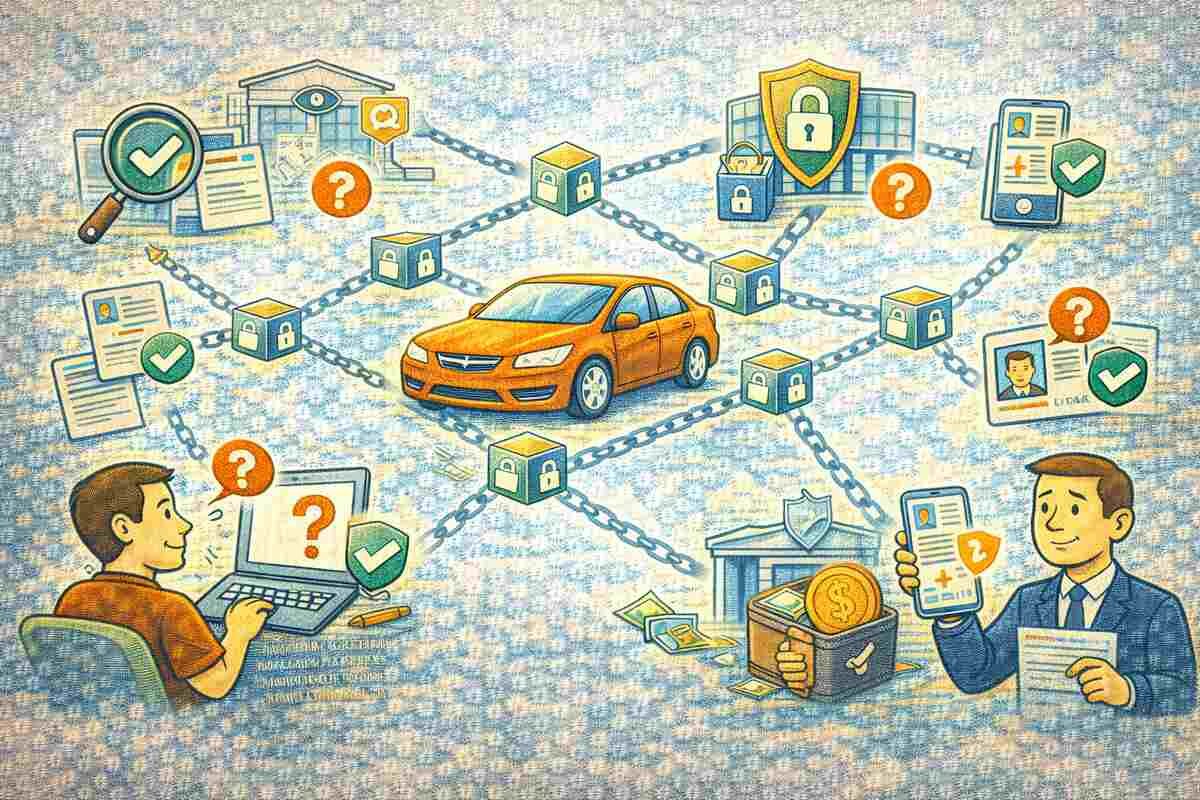

Blockchain Is Quietly Transforming Car Insurance
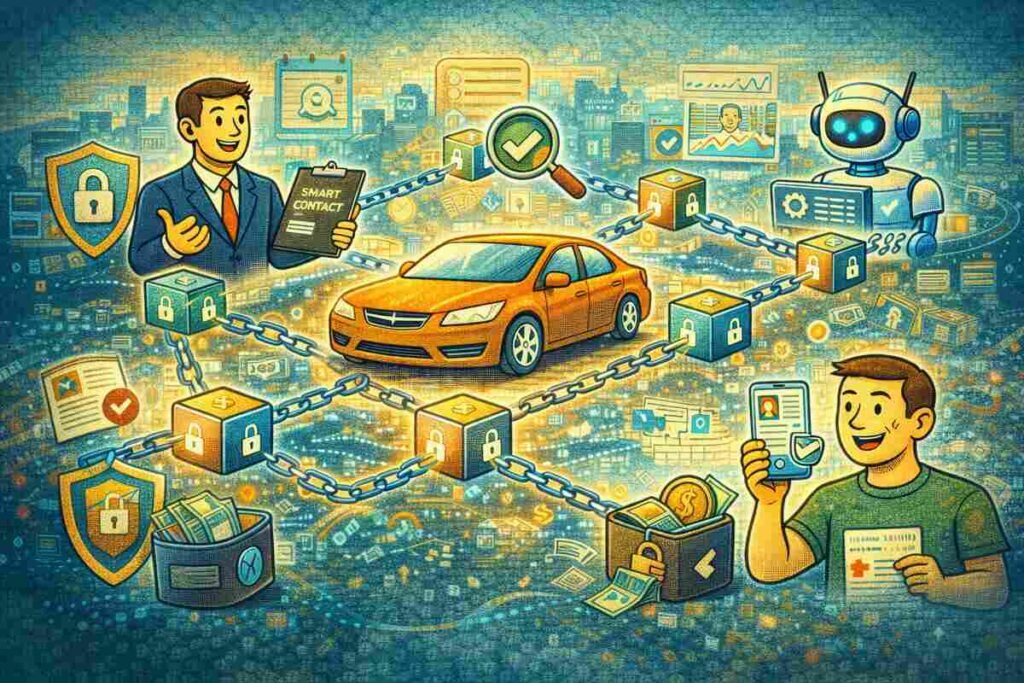
Blockchain in Car Insurance is moving far beyond cryptocurrency hype. In 2026, its most practical and impactful use is transforming how car insurance works behind the scenes.
Insurers are under growing pressure to process claims faster, reduce fraud, secure sensitive data, and rebuild trust with policyholders. Blockchain combined with AI, telematics, and digital identity systems is emerging as a powerful solution.
According to a Harvard Business Review analysis, insurers adopting blockchain-based systems report major improvements in claims speed, data accuracy, and fraud prevention.
This FAQ-style guide explains how blockchain works in car insurance, why insurers are investing in it, and what drivers should expect from blockchain-powered coverage in 2026.
What Is Blockchain (In Simple Terms)?
Blockchain is a shared, tamper-resistant digital ledger.
Instead of data being stored in one central database, blockchain records information across multiple synchronized systems. Once data is added, it cannot be altered without consensus making it extremely secure and transparent.
Key Blockchain Features
- Immutable records
- Decentralized verification
- Time-stamped transactions
- Transparent audit trails
- Strong cryptographic security
Takeaway: Blockchain creates trust without relying on a single authority.
Why Car Insurance Needs Blockchain in 2026
Traditional insurance systems struggle with speed, trust, and data integrity.
Core Problems Blockchain Addresses
- Slow claims processing
- Data silos between insurers, repair shops, and regulators
- Fraudulent or altered claim documents
- Duplicate or inflated claims
- Cybersecurity risks
Industry Insight: The World Economic Forum has identified blockchain as a foundational technology for secure data sharing in financial services, including insurance, in its technology outlook.
Takeaway: Insurance complexity creates friction blockchain removes it.
FAQ 1: How Does Blockchain Speed Up Car Insurance Claims?
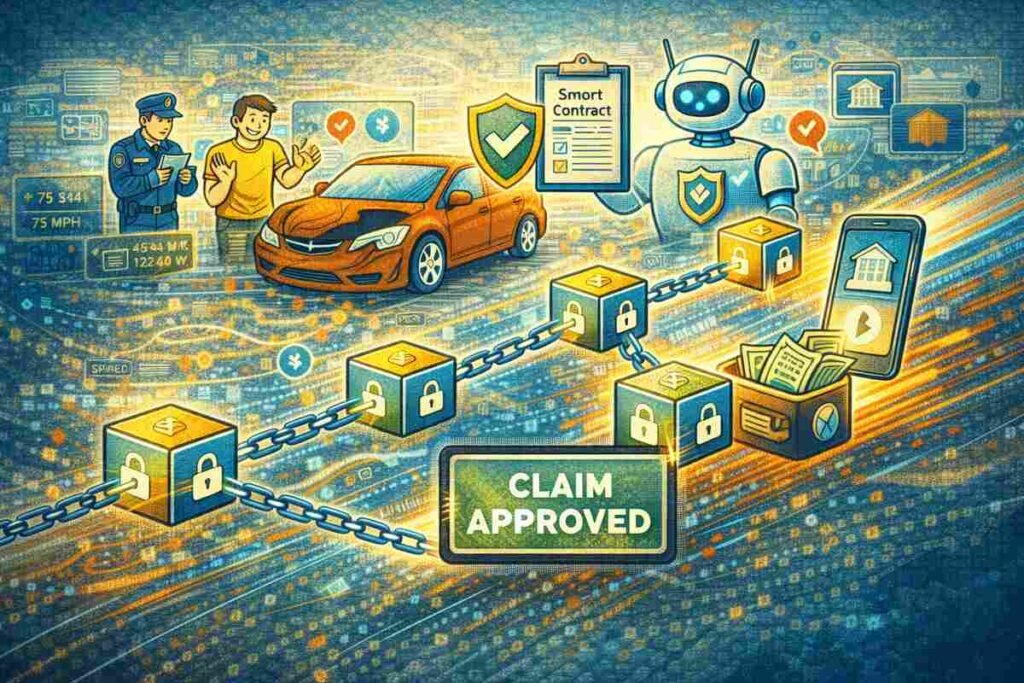
Blockchain reduces delays by eliminating manual verification steps.
How Faster Claims Work
- Accident data is recorded instantly
- Policy details are verified automatically
- Smart contracts trigger claim actions
- Approved payments are released immediately
Example: After a verified accident, a smart contract automatically authorizes repair payments, no adjuster back-and-forth required.
Reference: McKinsey & Company research shows blockchain can cut claims settlement times by up to 50%.
Takeaway: Less paperwork = faster payouts.
FAQ 2: What Are Smart Contracts in Car Insurance?
Smart contracts are self-executing agreements stored on the blockchain.
How They Work
- Conditions are pre-programmed
- When conditions are met, actions execute automatically
- No manual approval needed
Insurance Use Cases
- Automatic claim approval for minor accidents
- Mileage-based premium adjustments
- Instant coverage activation or termination
Example: If telematics data confirms a low-speed collision below a set threshold, the smart contract initiates payment automatically.
Takeaway: Smart contracts replace delays with logic.
FAQ 3: How Does Blockchain Improve Data Security?
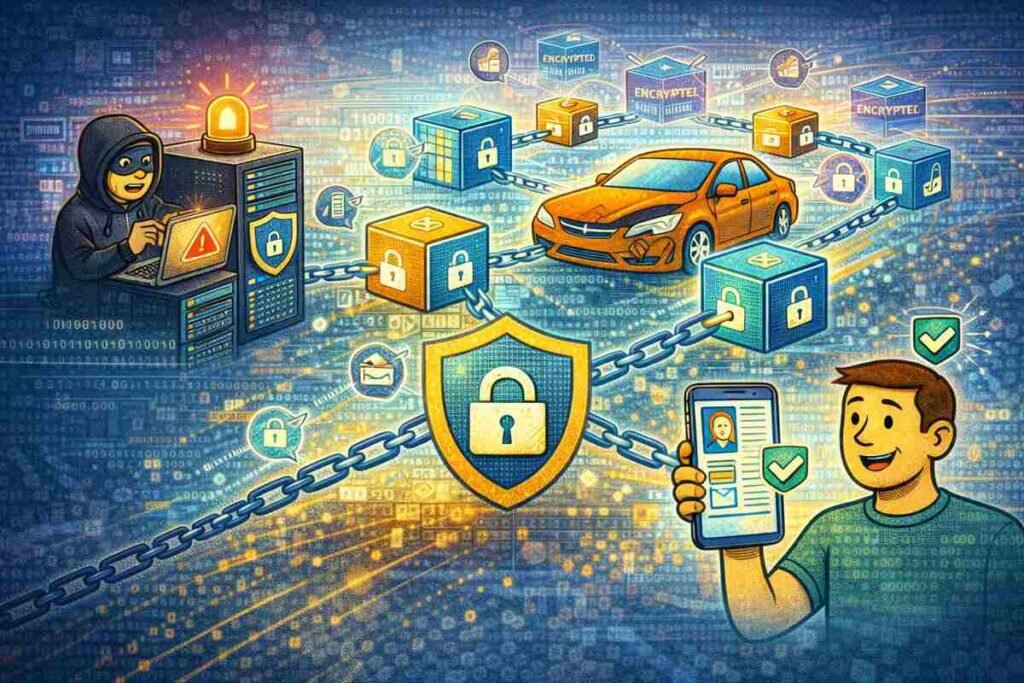
Car insurance handles highly sensitive data.
Why Blockchain Is More Secure
- Data is encrypted and distributed
- No single point of failure
- Unauthorized changes are immediately detectable
Cybersecurity Insight: The National Institute of Standards and Technology (NIST) explains how decentralized ledgers reduce breach risks in its digital security guidance.
Takeaway: Hacking one server no longer compromises the system.
FAQ 4: Can Blockchain Reduce Car Insurance Fraud?
Yes, and significantly.
Fraud Problems Blockchain Solves
- Duplicate claims across insurers
- Altered repair invoices
- Fake accident histories
- Synthetic identities
Because records are immutable, once an accident or claim is logged, it cannot be changed retroactively.
Industry Data: The National Insurance Crime Bureau highlights fraud prevention as a key benefit of shared, tamper-proof data systems in its fraud prevention resources.
Takeaway: Blockchain makes cheating far harder.
FAQ 5: How Does Blockchain Work With Telematics and Connected Cars?
Blockchain acts as the trusted data layer.
Integration Benefits
- Telematics data is verified before use
- Driving behavior records can’t be manipulated
- Accident data is shared securely between parties
Example: Vehicle sensors record crash data, which is hashed and stored on blockchain to ensure authenticity.
Takeaway: Trusted data leads to fair pricing and faster claims.
FAQ 6: Will Drivers Control Their Own Insurance Data?
Increasingly, yes.
What’s Changing
- Drivers can grant or revoke data access
- Insurers access only what’s needed
- Data portability between insurers improves
Consumer Insight: MIT Technology Review discusses user-controlled data models in its blockchain coverage.
Takeaway: Data ownership is shifting back to drivers.
FAQ 7: Does Blockchain Lower Insurance Costs?
Indirectly—but meaningfully.
How Savings Happen
- Reduced fraud losses
- Lower administrative costs
- Faster claims resolution
- Fewer disputes
Savings may not appear immediately, but over time they help stabilize premiums.
Takeaway: Efficiency today = affordability tomorrow.
Real-Life Example: A Blockchain-Based Claim
After a minor collision, vehicle sensor data was logged to a shared blockchain. The policy’s smart contract verified coverage and released payment to the repair shop within hours.
No phone calls. No paperwork. No disputes.
Lesson: Automation + trust = speed.
Comparison Table: Traditional vs Blockchain-Based Insurance
| Feature | Traditional Insurance | Blockchain Insurance |
|---|---|---|
| Claim speed | Days or weeks | Minutes or hours |
| Data security | Centralized | Distributed |
| Fraud resistance | Moderate | High |
| Transparency | Limited | Strong |
| Data ownership | Insurer-centric | User-centric |
Common Misconceptions About Blockchain in Insurance
- “It’s only for crypto” – False
- “It’s not secure” – Blockchain improves security
- “It replaces insurers” – It enhances systems, not replaces them
Takeaway: Blockchain is infrastructure, not disruption for disruption’s sake.
What Drivers Should Expect Next
By late 2026, many drivers will experience blockchain without realizing it.
Upcoming Changes
- Faster digital claims
- Greater transparency
- Reduced paperwork
- More personalized pricing
Takeaway: The best technology feels invisible.
Final Thoughts
Blockchain is not hype in car insurance, it’s infrastructure. In 2026, it’s quietly making claims faster, data safer, and fraud harder.
For drivers, the benefits show up as speed, security, and fairness. For insurers, it’s efficiency and trust. When both sides win, the system works better.
If this guide helped you understand how blockchain is reshaping car insurance, share it or explore more future-focused insurance insights on our blog.