


Why Smart Shopping Matters More Than Ever

Shopping car insurance in 2025 isn’t what it used to be. The industry has evolved rapidly with AI-driven pricing models, telematics-based discounts, and digital-first insurers competing for your business. As a driver, this can feel overwhelming but it also means there have never been more opportunities to save money without losing quality protection.
According to the Insurance Information Institute (III), the average U.S. auto insurance premium rose by nearly 17% between 2023 and 2025, driven by higher repair costs and advanced vehicle technology. However, drivers who shop smart comparing policies, reviewing coverage, and taking advantage of digital tools can cut their costs by up to 30% annually.
This guide reveals the best practices for shopping car insurance in 2025, ensuring you make informed, confident, and budget-friendly decisions.
1. Know What Coverage You Actually Need
Best for: First-time buyers or drivers reassessing their protection.
Before comparing quotes, understand what kind of coverage fits your needs. Over-insuring wastes money, while under-insuring leaves you exposed. Finding balance starts with understanding each component of your policy.
Essential Coverage Types:
- Liability: Covers injury or property damage you cause to others. Required by law in most states.
- Collision: Pays for your vehicle damage after an accident.
- Comprehensive: Covers theft, vandalism, or weather damage.
- Uninsured/Underinsured Motorist: Protects you if someone else is at fault but lacks coverage.
- Personal Injury Protection (PIP): Covers medical expenses regardless of fault.
Example:
Nina owned an older vehicle and dropped collision coverage to save $220 per year. Because her car’s value was less than her deductible, it was a smart move.
Pro Tip: Use online coverage calculators or consult your insurer to tailor protection levels. Paying for unnecessary coverage is one of the most common mistakes drivers make.
Research Insight: Consumer Reports recommends adjusting your coverage yearly as your car depreciates or your driving habits change.
Takeaway: A policy tailored to your needs offers the best protection and value.
2. Compare Multiple Quotes (and Not Just the Price)
Best for: Every driver especially those who’ve stayed with one insurer for years.
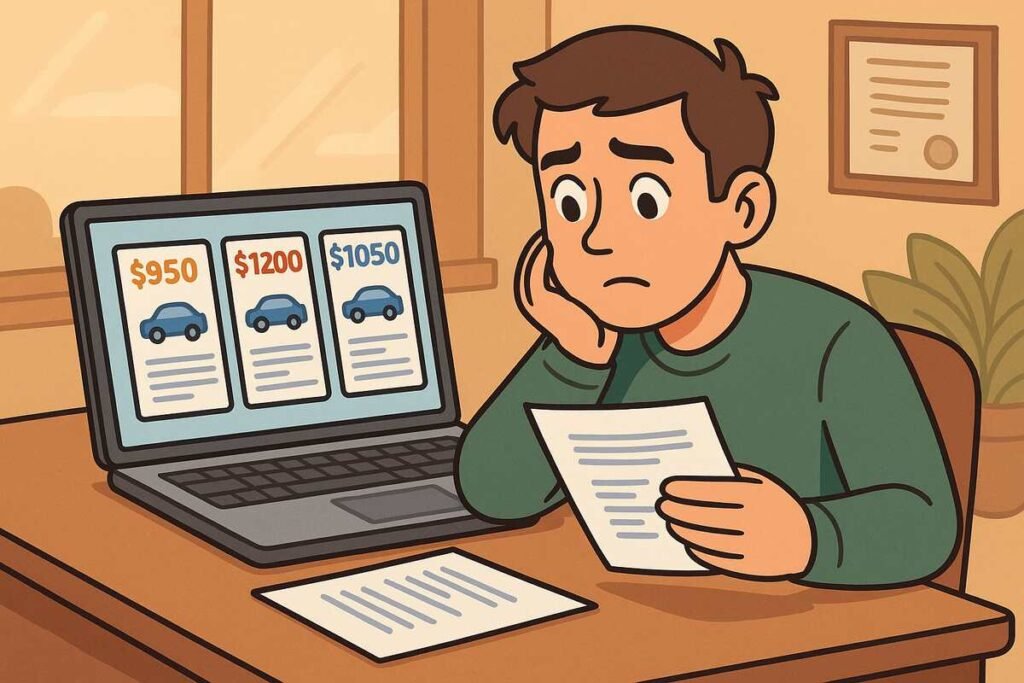
Comparing quotes isn’t just about finding the lowest price it’s about finding the best value. Each insurer uses different algorithms to assess risk, so identical coverage can vary widely in cost.
Smart Comparison Tools:
Example:
Alex compared five insurers and found a $600 difference for identical coverage. By switching, he kept his liability limits the same and gained accident forgiveness.
Pro Tip: Always compare at least three quotes using the same coverage limits for an apples-to-apples comparison.
Research Insight: The Consumer Federation of America found that switching insurers every 2–3 years can save up to $500 annually on average.
Takeaway: Comparison isn’t disloyal—it’s strategic.
3. Take Advantage of New Discounts and Telematics
Best for: Safe and tech-savvy drivers.
In 2025, insurers are rewarding data-driven responsibility. Telematics programs use apps or devices to track safe driving behaviors—rewarding you for braking gently, driving fewer miles, and avoiding late-night trips.
Popular Telematics Programs:
- Progressive Snapshot
- State Farm Drive Safe & Save
- Allstate Drivewise
Other Discounts to Explore:
- Multi-policy bundling (home, renter’s, or life insurance).
- Paying premiums annually instead of monthly.
- Safety features like anti-lock brakes and collision warning.
- Electric or hybrid vehicle discounts.
Example:
Jordan joined State Farm’s Drive Safe & Save and reduced his annual premium by 18% after consistently driving within safe speed and braking parameters.
Pro Tip: Ask about telematics before renewing your policy—new programs are added regularly.
Research Insight: The Harvard Business Review reports that AI-based data monitoring reduces insurer risk, leading to expanded discounts for careful drivers.
Takeaway: Safer driving and smart tech equal measurable savings.
4. Review Deductibles and Limits for Smart Savings
Best for: Drivers balancing protection and affordability.
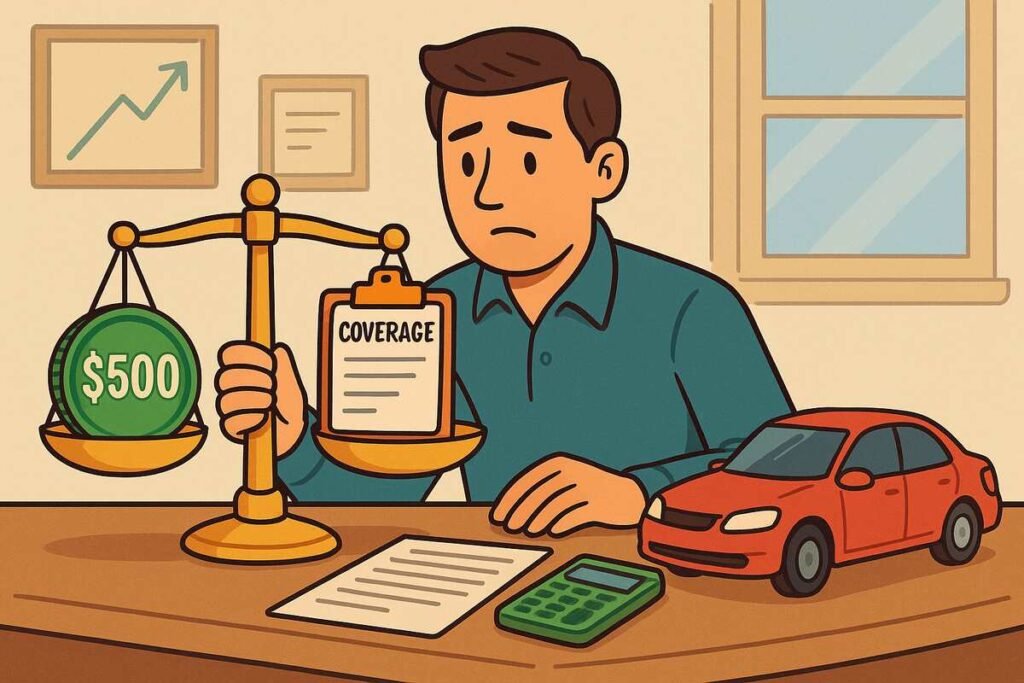
Your deductible the amount you pay before insurance coverage applies directly affects your premium. A higher deductible lowers your monthly rate but increases your out-of-pocket expense in an accident.
Common Deductible Ranges:
- $500: Standard for balanced coverage.
- $1,000: Ideal for safe drivers with emergency savings.
- $2,000: For those willing to assume higher risk for lower rates.
Example:
Raising a deductible from $500 to $1,000 can save 10–15% annually, often $200–$300 per policy.
Pro Tip: Keep your deductible amount in a separate savings account. That way, you’re prepared for unexpected costs.
Research Insight: The National Association of Insurance Commissioners (NAIC) recommends choosing a deductible you can realistically afford, even after short-term emergencies.
Takeaway: Balance your deductible to achieve both financial comfort and cost efficiency.
5. Check Insurer Reputation and Customer Service
Best for: Drivers seeking reliability and transparency.
A low premium means little if your insurer is difficult during claims. Always research each company’s reputation before signing up.
What to Look For:
- Claim response time.
- Customer satisfaction ratings.
- Financial stability (A.M. Best ratings).
Trusted Review Sources:
Example:
Rachel chose a lower-cost insurer but faced a 3-month claim delay. She later switched to a provider with stronger J.D. Power ratings and experienced same-week payouts.
Pro Tip: Always read customer reviews for your specific state local satisfaction often differs from national averages.
Research Insight: According to J.D. Power, companies with higher customer satisfaction scores retain twice as many customers year-over-year.
Takeaway: A trustworthy insurer saves time, stress, and money in the long run.
Real-Life Story: The Power of Smart Shopping
Ethan and Mia, a couple from Arizona, reviewed their policy after buying an electric vehicle. By using The Zebra to compare rates, enrolling in a telematics program, and raising their deductible from $500 to $1,000, they saved $740 per year without cutting coverage. Their insurer also rewarded them for the EV’s safety technology with an additional discount.
Lesson: Smart insurance shopping is less about spending less and more about getting more value for your dollar.
Comparison Table: Smart Shopping Tactics in 2025
| Strategy | Average Savings | Effort Level | Best For |
|---|---|---|---|
| Compare multiple quotes | $300–$700/year | Medium | All drivers |
| Enroll in telematics programs | $150–$400/year | Low | Safe drivers |
| Adjust deductibles | $200–$300/year | Low | Experienced drivers |
| Bundle policies | $400–$800/year | Low | Families & homeowners |
| Drop unnecessary coverage | $100–$250/year | Low | Owners of older cars |
Frequently Asked Questions About Shopping Car Insurance in 2025
1. How often should I shop for new car insurance?
Every 12–18 months or after major life events (moving, marriage, or buying a new car).
2. Does comparing quotes affect my credit score?
No. Online quote checks are soft inquiries and do not impact credit.
3. Should I switch insurers just for a lower price?
Only if the new provider offers similar or better customer service and coverage.
4. Are online-only insurers reliable?
Yes—many are financially strong and provide 24/7 digital claims, but always verify A.M. Best ratings.
5. What’s the best way to save long-term?
Combine telematics discounts, safe driving habits, and policy bundling for consistent savings.
Final Thoughts
Shopping for car insurance in 2025 doesn’t have to be stressful or confusing. With smart comparisons, data-driven discounts, and an understanding of your true coverage needs, you can cut costs while strengthening protection.
Remember insurance is more than a monthly payment. It’s your financial safety net. Review it with the same care you’d give any major investment.
If this guide helped you navigate car insurance shopping, share it with other drivers and explore more auto coverage tips on our blog.