

Why Safe Driving Pays Off
Auto Insurance Premiums can feel like one of those unavoidable expenses in life—but the way you drive directly affects how much you pay. According to the National Association of Insurance Commissioners (NAIC), insurers heavily weigh your driving behavior, past claims, and risk profile when calculating rates. Simply put: the safer you drive, the more likely you are to enjoy lower premiums.
Safe driving isn’t just about avoiding accidents it’s also about building trust with your insurance provider. By demonstrating responsible habits behind the wheel, you can qualify for discounts, reduce risks, and even unlock special rewards programs.
Here are safe driving strategies that can lower your auto insurance premiums while also keeping you and others safe on the road.
1. Maintain a Clean Driving Record
A spotless driving history is one of the most powerful ways to lower your insurance costs.
Why it matters:
- Tickets and at-fault accidents increase your risk profile.
- Insurers reward claim-free periods with discounts.
- A single speeding ticket can raise rates by 20% or more.
Pro Tip: If you receive a minor violation, ask if your state offers defensive driving courses to remove points from your record.
Takeaway: Treat every trip as a chance to keep your record clean—your wallet will thank you.
2. Take Advantage of Telematics Programs
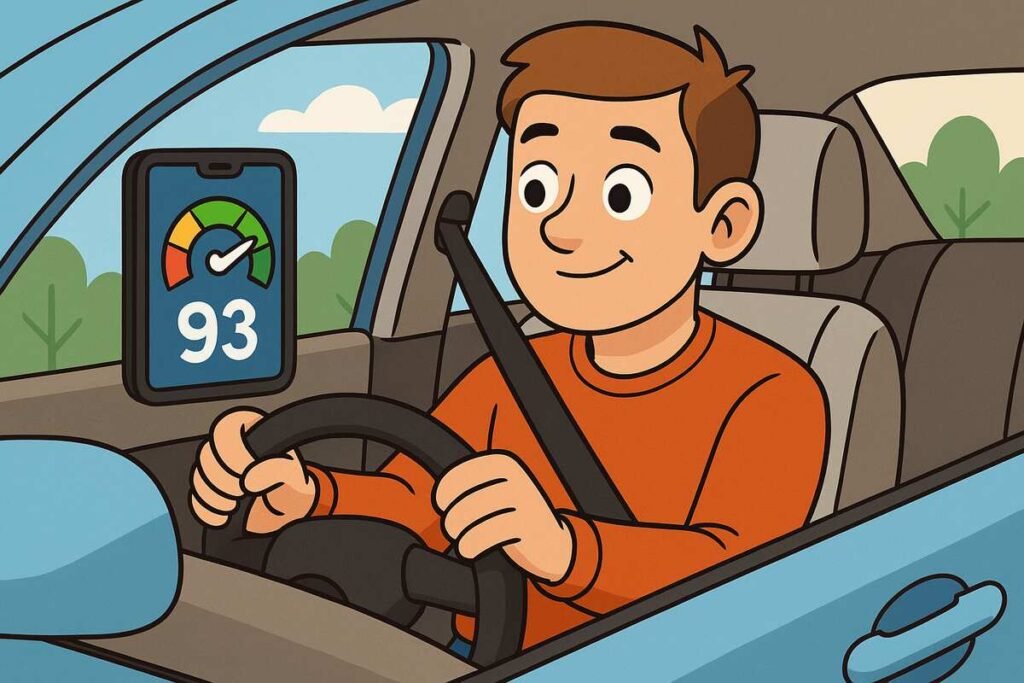
Many insurers now offer telematics or usage-based programs that monitor your driving behavior using an app or plug-in device.
Behaviors tracked include:
- Speeding and harsh braking.
- Time of day you drive (late-night trips can raise risks).
- Average mileage.
Benefits:
- Safe drivers can save 10–30% on premiums.
- Instant feedback helps you improve your habits.
- Some programs even offer rewards like gift cards.
Example: A driver in New Jersey enrolled in a usage-based program and saved $200 annually after consistent safe-driving scores.
3. Avoid Distracted Driving
Texting, scrolling, or even adjusting GPS while driving significantly increases accident risk.
Insurance impact:
- Distracted driving tickets are treated similarly to reckless driving.
- One violation can spike premiums for up to three years.
How to avoid it:
- Use hands-free devices for calls.
- Set your GPS before driving.
- Keep phones out of reach to minimize temptation.
Reference: The CDC reports that distracted driving kills nine people every day in the U.S.—a sobering reminder of its dangers.
4. Respect Speed Limits and Traffic Laws
Consistently obeying speed limits and signals does more than prevent tickets—it also establishes you as a low-risk driver.
Insurance advantages:
- Fewer traffic violations keep premiums stable.
- Long periods without incidents often qualify you for a safe driver discount.
- Serious offenses like DUIs dramatically raise rates or even cancel coverage.
Case Study: After two years of violation-free driving, Emily earned a 20% discount from her insurer, lowering her annual premium by $350.
5. Limit Annual Mileage
The fewer miles you drive, the less exposure you have to accidents.
Savings opportunities:
- Low-mileage discounts (often for under 7,500–10,000 miles/year).
- Pay-per-mile insurance models for urban residents.
Practical steps:
- Carpool or use public transit.
- Work from home when possible.
- Combine errands to reduce trips.
Example: A hybrid worker who cut commuting from five days to two saw their insurer reduce premiums by 12%.
6. Keep Your Vehicle Well-Maintained
A poorly maintained car increases the risk of breakdowns and accidents.
Maintenance tips:
- Regularly check brakes, tires, and lights.
- Keep safety features like airbags and sensors functional.
- Follow manufacturer-recommended service schedules.
Pro Insight: According to the NHTSA, mechanical failures contribute to thousands of crashes each year. A well-maintained car keeps you safer—and may qualify for discounts if equipped with modern safety tech.
7. Complete Defensive Driving Courses
Many insurers offer discounts if you complete state-approved defensive driving or driver safety courses.
Benefits:
- Discounts range from 5–15%.
- Helps reduce points from your license.
- Reinforces safe driving habits.
Example: After completing a defensive driving course, Mark saved $150 annually and felt more confident avoiding accidents.
Real-Life Scenario: Safe Driving Pays Off
Two drivers, Alex and Jordan, both 30 years old with identical vehicles:
- Alex: Has one speeding ticket and no telematics enrollment. Premium: $1,600/year.
- Jordan: Clean record, enrolled in a safe-driving program, and completed a defensive driving course. Premium: $1,150/year.
Result: Jordan saves $450 annually—proof that safe driving pays.
Comparison Table: Safe Driving Strategies vs. Savings
| Strategy | Potential Savings | Extra Benefits |
|---|---|---|
| Clean driving record | Up to 20% | Builds long-term trust with insurers |
| Telematics enrollment | 10–30% | Rewards & habit improvement |
| Avoiding distracted driving | Prevents violations | Safer for everyone on the road |
| Respecting traffic laws | 5–20% | Reduces risk of license suspension |
| Limiting mileage | 10–15% | Eco-friendly lifestyle |
| Vehicle maintenance | Varies | Safer, smoother driving |
| Defensive driving course | 5–15% | Reduces license points |
Frequently Asked Questions About Safe Driving and Insurance Premiums
1. How long does a traffic violation affect my premium?
Typically 3–5 years, depending on severity and state laws.
2. Do all insurers offer telematics discounts?
Not all, but many major providers do. Always ask your insurer if it’s available.
3. Can older drivers benefit from safe-driving discounts?
Yes. Some insurers even offer senior defensive driving programs with extra savings.
4. Does car maintenance really affect insurance costs?
Directly, not always—but cars with advanced safety features and fewer breakdowns are often cheaper to insure.
5. Is it worth switching insurers for better safe-driving rewards?
Yes. Some insurers are more generous with discounts, so compare annually.
Final Thoughts
Safe driving strategies go beyond protecting lives—they also protect your wallet. From keeping a clean record and obeying traffic laws to leveraging telematics and defensive driving courses, these habits show insurers that you’re a low-risk driver worthy of lower premiums.
The bottom line: consistency counts. The longer you drive safely, the more you save. Insurance companies notice and reward responsibility behind the wheel.
If this article gave you useful insights into lowering auto insurance premiums, share it with friends and family, and explore more driving tips on our blog.