


Driving Smart in a Changing Insurance World

In 2025, car insurance is no longer a one-size-fits-all necessity—it’s a customized financial strategy. As living costs rise and technology reshapes the industry, smart drivers are turning to innovative, affordable auto policies that balance protection, personalization, and savings.
According to the Insurance Information Institute, auto insurance premiums in the U.S. have increased by nearly 15% over the past two years, driven by inflation, costly repairs, and advanced vehicle technology. Yet, savvy consumers are fighting back—leveraging telematics, digital platforms, and data-driven pricing to keep their costs low.
This article explores what smart drivers are choosing in 2025, the key trends shaping affordable auto insurance, and how you can join them without compromising coverage.
1. Usage-Based Insurance: Paying Only for What You Drive
Best for: Low-mileage drivers, remote workers, and city commuters.
One of the biggest cost-saving revolutions in 2025 is usage-based insurance (UBI), also known as pay-as-you-go coverage. This model uses telematics—through a mobile app or plug-in device—to monitor your driving habits and mileage, allowing insurers to charge fairer rates.
Why It’s Popular:
- Personalized premiums based on driving behavior.
- Ideal for those who drive less than 10,000 miles annually.
- Rewards safe drivers with discounts of up to 30%.
Example:
Emma, a part-time consultant who works from home, switched to a UBI plan from Allstate’s Milewise. She now pays a base rate of $30 per month plus $0.05 per mile, saving over $600 annually.
Research Insight: A McKinsey report predicts that by 2025, 1 in 5 new auto policies will be usage-based.
Pro Tip: If you drive less than 40 miles daily, consider switching to pay-as-you-go insurance—it’s the simplest way to cut costs.
Takeaway: Drive less, pay less, and enjoy fairer pricing.
2. Digital-First Insurance Providers: Cutting Out the Middleman

Best for: Tech-savvy drivers who want speed, transparency, and simplicity.
In 2025, traditional insurance agencies are being challenged by digital-first insurers like Lemonade, Root, and Clearcover. These companies operate entirely online, using artificial intelligence to quote, underwrite, and process claims quickly.
Key Benefits:
- Instant policy setup and approval.
- Lower overhead = lower premiums.
- Real-time claim processing with minimal paperwork.
Example:
Lemonade users can file and get claims approved in as little as 90 seconds. Their AI model also ensures fair, data-driven pricing based on actual risk profiles rather than generic demographics.
Research Insight: A Forbes Advisor review notes that digital insurers save customers an average of 18% annually on premiums compared to traditional providers.
Pro Tip: Read online reviews and confirm digital insurers are licensed in your state before switching.
Takeaway: The future of affordable auto coverage is fast, digital, and data-driven.
3. Multi-Policy Bundles: The Classic Savings Strategy Reinvented
Best for: Homeowners, renters, and families.
Bundling remains one of the most reliable ways to save on auto insurance—but in 2025, it’s evolved. Insurers now allow flexible bundles across home, renters, pet, and even life insurance policies.
How Bundling Saves You Money:
- Up to 25% off when combining multiple policies.
- Simplified billing and claims management.
- Loyalty rewards and long-term rate stability.
Example:
James and Nora bundled their car and home insurance through Progressive, saving $420 a year while gaining extended roadside coverage.
Research Insight: A NerdWallet study found that multi-policy holders save an average of $500 annually, depending on location and coverage type.
Pro Tip: Compare bundle offers across insurers—each company calculates discounts differently.
Takeaway: Classic doesn’t mean outdated—bundling remains one of the smartest ways to cut costs.
4. Eco-Friendly Discounts for Electric and Hybrid Cars
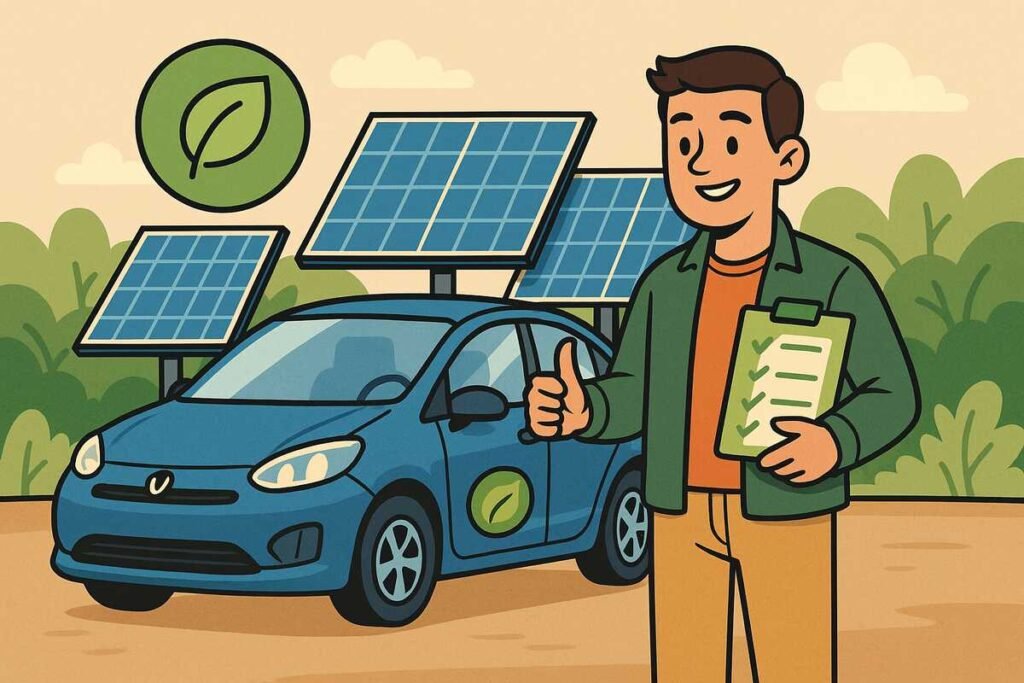
Best for: Environmentally conscious drivers and EV owners.
As electric vehicles (EVs) dominate the market, insurers are adapting with green discounts for drivers who go electric or hybrid. These incentives reward eco-friendly driving habits while reducing environmental impact.
Popular Incentives Include:
- Up to 15% lower premiums for EV and hybrid owners.
- Discounts for vehicles with regenerative braking and low maintenance costs.
- Partnerships with automakers offering exclusive coverage rates.
Example:
Tesla’s in-house insurance program uses real-time driving behavior to determine rates, offering lower premiums for safe drivers and minimal claim histories.
Research Insight: The U.S. Department of Energy reports that EV maintenance costs are roughly 40% lower than gasoline vehicles, making them cheaper to insure long-term.
Pro Tip: Ask your insurer about eco-discounts or EV partnerships—they’re often not advertised publicly.
Takeaway: Going green now means saving green, too.
5. Safe-Driver Rewards and Data-Driven Discounts
Best for: Drivers with clean records and consistent driving habits.
Insurance companies are gamifying safe driving through behavior-based discounts. Using telematics or mobile tracking apps, insurers reward safe drivers with progressively lower rates.
Metrics Monitored Include:
- Speed and acceleration control.
- Brake and cornering smoothness.
- Consistency in avoiding late-night or high-risk driving.
Example:
State Farm’s Drive Safe & Save program uses smartphone sensors to analyze driving. The safer you drive, the bigger your savings—up to 30% off renewal premiums.
Research Insight: The National Highway Traffic Safety Administration (NHTSA) found that safe-driver programs reduce collision rates by 20% or more, helping insurers lower costs across the board.
Pro Tip: Combine telematics-based discounts with low-mileage plans for maximum savings.
Takeaway: Drive smart, drive safe—your habits can literally pay off.
Real-Life Story: How One Driver Saved $800 in a Year
After transitioning to remote work, Lisa realized she was paying for coverage she rarely used. She switched from a traditional plan to a usage-based policy and installed her insurer’s safe-driving app. Within a year, she saved $820, improved her driving habits, and gained insights into her fuel efficiency.
Lesson: Smart drivers don’t just look for lower prices—they leverage data to optimize every aspect of their coverage.
Comparison Table: Smart Auto Policy Choices in 2025
| Policy Type | Best For | Average Savings | Key Feature |
|---|---|---|---|
| Usage-Based | Low-mileage drivers | Up to 40% | Pay per mile or behavior |
| Digital-First | Tech-savvy users | 18% | AI-powered quotes and claims |
| Multi-Policy Bundles | Homeowners & families | 25% | Combine auto, home, or life |
| Eco-Friendly | EV & hybrid owners | 15% | Sustainable driving discounts |
| Safe-Driver Rewards | Defensive drivers | 30% | Real-time driving analysis |
Frequently Asked Questions About Affordable Auto Policies in 2025
1. What’s the best way to find affordable auto insurance?
Compare quotes from multiple digital platforms and look for discounts that match your lifestyle (low mileage, good driving record, etc.).
2. Are telematics programs worth it?
Yes. They often yield 10–30% savings, especially for safe and infrequent drivers.
3. Do digital insurers offer the same protection as traditional ones?
Absolutely. They’re regulated by the same state laws and often backed by major underwriters.
4. Will switching insurers affect my credit or coverage history?
No, as long as you maintain continuous coverage and avoid lapses between policies.
5. What’s the fastest way to lower my premium?
Bundle your insurance, maintain a clean driving record, and enroll in telematics-based programs.
Final Thoughts
In 2025, affordable auto policies are no longer about finding the cheapest plan—they’re about choosing smart, personalized coverage that fits your lifestyle. From pay-as-you-go options to AI-powered pricing, modern drivers have more control, transparency, and savings than ever before.
The key? Stay proactive. Review your policy annually, track your driving data, and leverage digital tools to ensure you’re getting maximum value for your money.
If this article helped you rethink your car insurance strategy, share it with other smart drivers and explore more insights on our blog.